Podcast Episodes

    Explore our collection of heartfelt stories, expert interviews, and advocacy discussions from the congenital heart defect community.

    Disclaimer & Content Advisory

    Nothing in these episodes constitutes medical advice. These are personal experiences, opinions, and stories shared by the CHD community. This podcast contains honest discussions of medical trauma, adult language, and adult content. Listener discretion is advised.

    Listen On Your Favorite Platform

    FEATURED EPISODE

    Episode 7: The Mountains We Climb

    Full
    Episode 7: The Mountains We Climb artwork

    Can you climb El Capitan with a mechanical heart valve? English teacher and rock climber Bob Smith proves that CHD doesn't define your limits. Since his aortic valve replacement, he's conquered Mt. Rainier, El Capitan, and countless expert trails. Discover how some patients redefine what's possible with congenital heart defects. Guest: Bob Smith | Blog: myaorticadventure.blogspot.com | Duration: 44:13

    Play Episode
    00:44:13
    Share:
    Click anywhere to view episode page & discussion

    All Episodes

    Stronger Hearts: Part 1 - Building a Foundation from the NICU

    Full
    Stronger Hearts: Part 1 - Building a Foundation from the NICU artwork

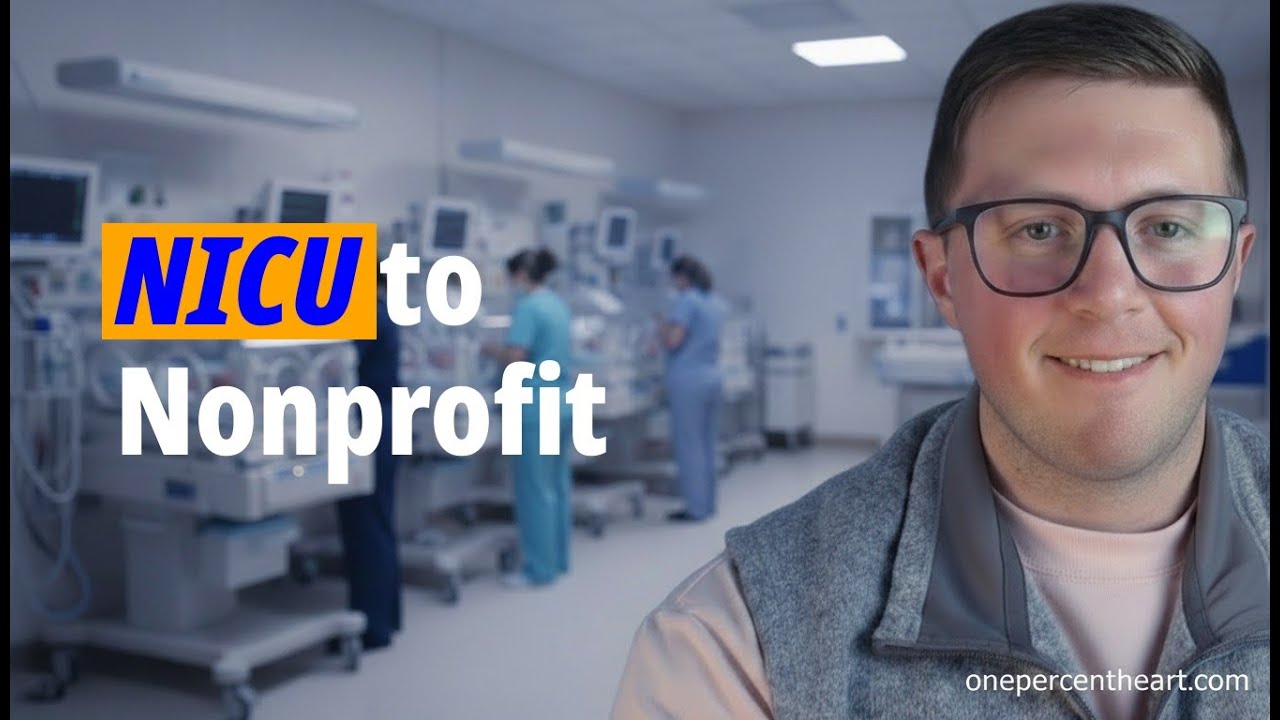
    What happens when your child's heart diagnosis becomes the catalyst for helping hundreds of other families?Connor Hill, co-founder of the Stronger Hearts Foundation, joins the show to share his family's journey with CHD — from the terrifying early days with their son Dawson to creating an organization that provides care packages, housing support, and resources for families navigating the same path.In Part 1, we talk about Dawson's incredible progress, the gut-check moments that inspired the foundation, and the real challenges families face during extended hospital stays. Connor gets honest about navigating medical emergencies and the toll it takes on everyone involved.Stay tuned for Part 2 — where we dig into relationships, communication, and how couples can either break or grow stronger through the CHD journey.Learn more about Stronger Hearts Foundation: http://strongerheartsfoundation.com/Contacts: The 1% Heart — onepercentheart.com • Instagram @theCHDpodcast • Email: support@onepercentheart.comDisclaimer & Trigger Warning: Nothing in this episode constitutes medical advice. These are personal experiences, opinions, and stories. This podcast contains honest discussions of medical trauma. Listener discretion is advised.Keywords: congenital heart defects, Stronger Hearts Foundation, NICU, parenting, CHD family support, heart surgery, CHD awareness

    Play Episode
    00:24:57
    Share:
    Click anywhere to view episode page & discussion

    The Longest Lived Open Heart Patient: Part 3 - Why It Matters

    Full
    The Longest Lived Open Heart Patient: Part 3 - Why It Matters  artwork

    The ripple effects of one 1952 surgery are still being felt today. In this final part, we explore the awareness gap that leaves thousands of CHD patients without proper care, the difference between congenital and acquired heart disease that even doctors confuse, and why Bill has spent years making sure other patients don't fall through the cracks. Bill reflects on what CHD means to him after 73 years, Dr. Taussig's work that made his life possible, and his mother's wisdom that shaped everything: "You're different, but you're not special." This episode is about the legacy of Blalock, Taussig, and Thomas - not just in medical journals, but in every patient who gets to grow up because of what they pioneered. Keywords: CHD awareness, congenital heart legacy, patient advocacy, adult congenital heart care, Blalock-Taussig-Thomas, living with heart defects, cardiac patient stories

    Play Episode
    00:35:04
    Share:

    This is Part 3, the final episode of this mini-series. Something you mentioned there is that a lot of people are struggling as much as we think we do. I think that's something that goes throughout the community. A lot of the time with congenital heart defects, you're either fine or you're not. When things come up, they're major and need to be addressed, but they're addressed surgically and the rest is follow-up. Something I say to people that tell me they don't feel like they should talk about it because they are not struggling now, or they are not struggling as much as others with mental health conditions or drug dependency issues, for example, is that there is a lot of pain, a lot of struggle, and a lot of pressure. It’s binary. It's a switch—either you're struggling or you're not. So, especially for these patients, when they say to me, "This is very difficult, but it's harder for people that have a visible disability," I like to bring it back to this: a struggle is a struggle. Your brain is going to react to it, whether it's the worst thing in the world or just slightly bad. Your cognitive perception of it will change significantly, and the way it hits you will change significantly, but the emotional aspect to it is going to be more or less a light switch. Now, I don't know if that's true 100% of the time, but I feel like it gives these patients a much better way to feel about themselves when they do hit that struggle. They could be 20 years out from surgeries and probably won't need one for another 20 years, and they still don't feel entitled to the kind of support that the ACHA, the Adult Congenital Heart Association, and other organizations offer. And that's why I like to tell them, "Just because you don't need everything right now doesn't mean you don't need something, some support, someone to talk to." Well, I've been told forever, since I had my surgery 73 (seventy-three) years ago, by just about every doctor I've seen, "Bill, at some point you're probably going to need a valve replacement." Well, that was 73 (seventy-three) years ago. It’s kind of getting old with me now. Everybody tells me that, and I say, "Really?" I'm almost 77 (seventy-seven) years old, and I haven't had a valve replacement. That's not to say I won't need one next year, of course. But if I do, you face it and you do it. I've never, even though everybody who has CHD and has had open heart surgery feels there's something hanging over their head in the future that is going to be difficult to overcome, whether it's a valve replacement or another surgery or something. You can't let it bother you. You really can't. Every time I see a doctor, they say, "You're going to need a valve replacement." I just don't let that bother me. If I do, I do. I don't sit and dwell about it. I don't worry about it. I've been there, I've got that, and I just keep moving. But I understand that people react to all this. One of the things I've learned through ACHA is people react to all this very differently. And it's the people who do need help getting through this that we want to reach, not only in terms of mental health issues or dealing with family issues. But, of course, there's the other side of the coin, which is just access to care. I've been fortunate to have had the resources all my life to have access to care, and it's probably kept me alive to get to 77 (seventy-seven). A lot of people don't have that ability or the availability to have access to care all the time. And that's one of the main things we're trying to do at ACHA is to spread access, and access not just to cardiac care, but to adult cardiac care. This is a whole different podcast. We can talk about what's the difference between the two, and there's a huge difference, as you know. But that's one of our missions at ACHA, to make sure that people like us have access to care to keep us going. And that's one of the reasons I'm involved. Yeah, well said. Now, we won't break into the nitty-gritty of the difference in care, but at a high level, how would you say pediatric and adult care is different? Then I'm going to compare it to my experience. How would I say that adult care is different? Adult and general care. Well, there are many answers to that. One is, of course, physiology. As we grow older, our heart and our heart structure and our system changes. In some ways, it becomes much more complex than the pediatric heart. And that's why we've learned in the last 10 (ten) years that we need cardiologists who are specially trained to deal with adult cardiac issues. I think it's like eight or nine out of 10 (ten) cardiologists in the country only know pediatric cardiology. Why are the reasons there's that sharp transition between the teen years and early adult years? It's that when you get to your teen years and you're becoming an adult, pediatric cardiologists don't want to deal with you anymore because they don't know how to deal with you anymore. They're not trained to deal with the adult heart, and you kind of feel like you're pushed aside. It's our job, our meaning ACHA, to help those people find cardiologists who specialize in adult care so they can continue to have the care that they need as they get older. And that's one of our major missions at ACHA. We're one of the few health organizations that exist where there's no cure for what we have. We've had it since we were born. It's in the name of our organization, congenital. Many other organizations, whether it's cancer, ALS, or MS, whatever those are, are acquired, if I can use that word, "acquired" diseases and conditions. We don't have that. We've had it all our lives, and there's no cure for it. We just have to adapt to it and do the best we can with it. So that's what makes our organization a little different than everybody else. When I go and I talk to people who want to know what ACHA does and why we're different from the American Heart Association or ALS or the Cancer Association, I say, "We're one of the few organizations where we don't have a cure. Our problem is access. Our problem is developing with something we've all had all our lives." And that's not as easy as you think if you haven't had that problem. So, yeah, that's why I think ACHA is such a critical organization and why we've got to do everything we can to support it. I'm right there with you. I'm happy you used the word "acquired," because not only is there a difference between pediatric congenital heart care and adult congenital heart care, but a lot of people also see it as acquired cardiology care. It's important to differentiate between congenital cardiology, which is for the malformations in the structure of the heart present at birth, such as pulmonary valve stenosis and what have you, versus acquired heart disease, which is an entirely different ball game. It's changes to the heart from a normal baseline as you age, be it from age itself, be it from diet or lack thereof, or just other age-related changes. What amazes me is I had pediatric cardiologists all through my life until I was 16 (sixteen) and had my last surgery. After that last surgery, the doctor—I mean, I probably had 12 (twelve) cardiologists before the age of 18 (eighteen). I said that once on the panel, and I had a room full of unhappy doctors. Afterwards, I switched to an adult cardiologist. I didn't know anything about adult congenital. I was going to acquire heart disease specialists. Then I came to Graduate School the first time at Vanderbilt, and it was right there in November 2020 (two thousand twenty), where, no matter what I did, I got COVID. Afterwards, my Vanderbilt school doctor said, "Hey, I want to get your heart checked just because we don't know how COVID affects it." So she sends me to a cardiologist, and the cardiologist says, "Why are you here? We have an entire adult congenital heart division." And I said, "What's that mean?" And boy, did that put me down the path. The difference, I mean, being able to speak to a cardiologist who not only understands the adult aspect but was able to bring me into the loop and at least, you know, I didn't know what I didn't know. Just one conversation with him, I could at least know what to Google and go read. I got—Chat GPT would not have been released yet, but I can go ask six different large language models, "Hey, what does this mean? How do I understand it? Explain it to me as someone with limited medical knowledge." And the narrative completely shifts. But none of my adult acquired heart disease doctors were able to mention that to me. None of them mentioned that I should be going to a congenital heart doctor, and none of them explained the difference. Right. Until I got out here. That happened what, 22 (twenty-two) 23 (twenty-three)? Right. Well, that's why it's so important that we have these clinics that we accredit around the country. I think we have 57 (fifty-seven), 56 (fifty-six), yeah. We have all these clinics. One of our best is at Vanderbilt, and we have one at Johns Hopkins, Stanford. We have them all over the country. But fortunately, these clinics are now being able to offer adult care to people who have grown up with a congenital heart problem. And now we no longer should, no longer be seen by a pediatric cardiologist. They should be seen by an adult congenital cardiologist. Fortunately, that universe is expanding, and in that respect, we're meeting our mission in that we're providing access to care, and hopefully, we'll continue to do that. When did the term "adult congenital heart care," adult congenital cardiology, enter your world? Did you go to a pediatric cardiologist for most of your life, or was there a program for you in place? Well, I went, no, I had a clear transition. My transition was when I was about 20 (twenty) when I started going to the Mayo. Doctor Warrens at the Mayo was an adult cardiologist, and she was special. I don't think she specialized, but she was aware of congenital adult cardiology. She was one of the trailblazers of adult congenital cardiology, Dr. Warrens. And I think that's when I first became aware that there was a difference between a cardiologist seeing you as an adult and a cardiologist who was seeing you as a child. I don't think I connected in my mind the phrase "adult congenital cardiology" exactly at that time. It wasn't really until Dr. Warren said to me, "At some point, you ought to see an adult congenital cardiologist, and I have one in Washington you should see because I trained her." And that's when I really became aware of the difference. And it was Doctor John, as I said, that brought to my attention ACHA and said you really should get involved in this organization, which I did. So your first adult cardiologist, I mean, your care in that field, really progressed as the field itself progressed. Yes, let's be frank here. Before your generation, adult congenital heart patients just weren't making it to adulthood or admissions were going undiagnosed. And they. I was probably a little bit ahead of the curve on that. I think when I first started going to the Mayo, adult congenital cardiology care was first coming into existence. And that's why I was very fortunate to be able to go to the Mayo because I think I got very good care early on in what I needed as I transitioned from my teen years to my adult years. But yeah. And one of the big issues we face in dealing with this whole question we're talking about is, number one, convincing people with cardiac issues that as an adult, they need special care. And secondly, providing them access to it. Because there are a lot of people around the country who have a congenital heart condition, and they don't know that there's a specialty for you as you become an adult. They think they can just go see their pediatric cardiologist, and they'll take care of them. Well, that doesn't work. And if you're told that, you shouldn't be told that because it doesn't work. So, we have a big mission and an important one. I think the latest number I saw was about 5 (five) or 6 (six) million people in the United States with a congenital heart condition. That's a big constituency. And growing rapidly, as one in 100 (one hundred) babies born today will have it. As care has progressed, we're diagnosing it earlier. We're fixing it earlier, or fixing the killers earlier. And this universe is only going to keep growing. But what really gets me is it is the most common birth defect, but because of all the different defects out there and sets of defects, a lot of people don't realize that there's an awareness issue. There's a major awareness issue for the condition overall. Quick sidebar, even people who know don't. When I organize the ACHA's national walk, the annual fundraising event, I took it to my current MBA cohort at Vanderbilt, and I had two gentlemen. In the 50-person (fifty-person) class, two guys came up to me and said, "Hey, I had this issue or had that issue when I was a kid, or I had open heart when I was a kid. Is that like a congenital heart defect?" I said, "Well, that is one. Have you followed up with a cardiologist?" Okay, so you remember when I said 75% (seventy-five percent) of patients are lost to care, and that's who we're trying to reach. That's you. And what really, I mean, I've been dying to tell this story. About two weeks ago, I was talking to a mentor of mine who has helped me. He helped me prepare for my ACHA board interviews. He helped me market the walk. He has helped me with everything in my professional and personal career, and a lot of that is ACHA. He's also donated a ton of money as he's helped me. And he was talking. It's like, "Yeah, and when I was a kid, I had this, actually I'd go to a cardiologist for a while because my mitral valve didn't grow quick enough, and there was considerable regurgitation, but I grew out of it." And it's a bubble. And I'm paraphrasing here because I was sitting there at GAS because this guy who knew everything about congenital heart charities and everything that I've gone through didn't even realize he had a CHD. So as we're sitting there, and fighting, and he didn't- when I said that to him, he kind of looked at me, it was a pretty big, like, oh shit moment for the both of us. But it proved, it proved the point of fighting for the ACHA, with the ACHA, to get patients access to adult care is a fight that is bigger than that because we're fighting for awareness of the congenital heart world, in a lot of ways. So, and this isn't real, this is going to be just an open-ended question. This is going to be like what, what do we do, Bill? How do, how do we address this? Well, it's a question I think about every day. I don't know. It is a tall mountain to climb. I think we—I know I talk about the issue a lot more with people who don't even have a heart condition. Every time I get an opportunity to talk to a group or talk to people, or I'm at a dinner with friends, I somehow try and get this issue on the table because maybe it's to the point where, "Oh God, because he's coming to dinner, we gotta think about something else to talk about." But yeah, awareness is the key. You're right, awareness is the keyword. I think what I've been thinking—you asked me the question, "How do we deal with it?" Let me give you my answer. I think if everybody who had CHD, like you and me and others, were to make a list of our 10 (ten) closest friends and say, "Look, you may or may not know about my story, but let me tell you my story and why it's important. And I would like you to help me. I would like you to help me get the awareness out." If you, my 10 (ten) closest friends, would somehow bring us to the attention of your 10 (ten) closest friends, tell them to go to the ACHA website, take a look, see what we're about, I would think that would help spread the awareness. I mean, that's basically what I try and do is get my friends to think about it and talk about it. Fortunately, when we have our walk here in the Washington area every year, I get my friends here in the DC area to get involved, not only to just donate, but to actually come to the walk and meet some of us who've experienced our CHD, have us talk about it, what the experience has been like, why it's so important, and why we need the assistance and the help and the money to get that awareness out. You're right. The key, the key thing here is awareness. We're going to be able to find the places to have clinics. We're going to be able to do the research grants. But the thing that keeps our organization going and healthy is awareness. We've got to make people aware that we're not just people with a heart problem or condition. We're people with a congenital heart problem. It's been with us all our life, and since one out of every 100 (one hundred) people born in the United States have this problem, any one of your friends or relatives can have it next week and not know that they're the one in 100 (one hundred) that have it. So this is important to get out there and talk about it and help us get the word out. So, you asked a very difficult question, "What do we do about it?" And I can only think about what I think I can do about it, and that's what I've been trying to do. But the very definition of grassroots is just making- it's starting with who you know and having them tell who they know, right? Right. Or if you can make a podcast and, you know, make people tell their stories because you're tired of telling yours. Yeah, right. Well, yeah, I think if people watch this, they can see through you and me that although we have a congenital heart condition, we've able to live our lives with it. Do important things, affect other people's lives, help other people who need to find a pathway like we have to deal with their situation. And if we can accomplish all that, we're doing important things. So I thank you for doing this podcast and certainly thank you for inviting me to participate. I think we are doing important things. I'd really like to think so, and I thank you for the kind words. I know that we're coming up on time, but there's a few things I want to ask you before I get to my big closing question. You touched on this previously in a way and how the title of longest lived open heart patient took you to advocacy. But taking that a step further, and this is going to touch on the million cool things you've done in your life that we didn't even talk about like helping with legislation post-Watergate and all your other very impressive. We talked about publishing the book, but just everything else you've done. When you think about legacy now, and you think about professionally and personally, and on the cardiac side with that title of longest lived open heart patient, where do you see your legacy? Where do you see your fingerprints on other people's lives? I mean, as somebody who's had a finger in your heart, what other hearts have you put your fingerprints on? Wow, that's a big question. I guess the answer is I just hope that I've been able to make a difference in people's lives in many different ways. And it starts, of course, with CHD and what we do with ACHA. And I hope that what I can say and tell people who have CHD will help them get through their situation, their individual situation with CHD. But I think I've, you know, you ask about legacy. Legacy isn't just one avenue. I'd like to think that all the students I've had in school, at law school, at some point they'll say, "Oh, I remember that professor, you know, 20 (twenty) years ago. He was really pretty good. I learned a lot from him." I've had students come up to me who had me 20 (twenty) years ago to say that. I like to think that the people I give tours to at the Air and Space Museum say, "Hey, that was really a great tour. I learned a lot, and thank you for doing that." So, I mean, we can have our legacy in many different buckets. And it's not only the CHD bucket, but there is just in any way impacting the lives of others. Just give you a very short, quick story of what I'm talking about. Just this morning, my great-nephew contacted me. He's applying to colleges, and he sent me his resume. He said, he said, "Uncle Billy, I'd like to have you take a look at this. I want you to review it before I send it out because I think I appreciate and respect your opinion." What more can you ask about for legacy and something like that? So I scribbled up his resume and put lots of marks on it and sent it back to him and had a quick conversation with him earlier. So I think that's a life I affected today. And that's that's what your legacy should be all about. That's probably a too simple an answer to a very important question, but. It's not a simple answer, but you made it simple to understand because I'm with you. I really am. I mean, I say for this podcast, doing this, the social media, the website, the publishing, the post-production, as somebody who has not a single creative bone in their body, it's a lot of work. But I always say, "If it can help one person just a little bit, it's worth it." Picking up one patient, if it can broaden the universe a little bit, if it gives one person one good resource, it's all worth it. And I think you're taking that a step further where legacy isn't about some grand, it's not about some big arc you build to yourself and all you've accomplished. It's not about the fact that some people know your name. What legacy is, is the little nudges you make throughout your life that make it better for everyone else. It's holding the door open for someone is just as important as giving away your entire net worth to an organization. In a lot of ways, it's binary, but if you can help, you need help. And that's what it comes back to. And, you know, you know, you have a good step up or legacy when you have a student you had 20 (twenty) years ago say to you, "You know, I really remember your class, and I think I learned a lot in your class." That's what you want to hear. And it's, and it's probably the kind of effect that you don't even think about at the time. It's just from what you're already doing and tying it all together. And I'm going to be, I'm thinking about how to say this as I say it, so I might speak over myself, but I think this all ties back to the legacy. It all ties back to the legacy of Blalock-Taussig, where if they haven't done what they've done, all that. I mean, another reason why I just love to talk to you is because of everything you've accomplished and the lives you've affected because of what they've accomplished. And the best part is there's a lot of CHD patients like you that are just at different spots in their life still making that influence. And none of it would have been possible without these doctors and caregivers and researchers that did all this work long before I was even born. And it ties back to the awareness issue where people don't even know they have congenital heart defects. So there's this universe out there of patients that are surviving and thriving who aren't aware or not involved in the community, making these dramatic differences as they live normal lives. And that's the takeaway I want everyone to get from this episode or series of episodes with you. No, when you talk about legacy, I come back to the letter I got from Doctor Tausik when she said when she got my letter and she said, "Hearing from you warmed my heart." You know that that means a lot to me. And you're right, the Tausik and Blaylock, and Thomas collectively and in their individual ways had such an influence on the medical world in general and the cardiology world in particular. And I feel very fortunate that that they all crossed their paths at one moment in their lives. And I was there with them when it happened. So if you want to talk about legacy, you know, I think about those things a lot. The legacy of CHD care and the legacy of CHD patients and the little nudges on a million different people making a million different nudges on the million different lives. And that's why awareness is so important. Absolutely. Because it's, it's already happens. All this is already happening in the background. It's just making sure people are aware of it so that the patients that need care know where to find the ACHA and that the ACHA can keep trucking. It has been an absolute pleasure talking to you, and I enjoyed it very much, everything I've wanted and more. But before I let you go, you know, I asked you, I mean, we've already really discussed what CHD means to you. And the typical question is, given everything we've discussed and everything you've done, what does CHD mean to you? We touched on it with legacy a bit, but I want to give you a chance to answer that and to mention anything else you want to before we end, including plugging your book again and plugging the ACHA. But you've lived a hell of a life. You've seen a lot, but you've also seen a lot of doctors, of cardiologists, as they grew, and you've seen, you know, you're talking to patients like me now and patients that are younger and going through something completely different at the highest or lowest level. What does CHD mean to you now? Well, you know, it's been a part of my life since I can remember. My very first memory is the day I was introduced to CHD. I think I just feel fortunate that I've had the life I've had with CHD, and that I feel very fulfilled by it in many ways. I just want to be able to help impart that to others so that they can have the fulfilling life that I feel I've had. Going back to what my mother said, "You're different, but you're not special. You're not unique, you're not different." I just want people who have CHD to get the most out of life, make sure they take care of themselves, they see the right doctors, they go to the right places, they keep involved with the community. And I think life will be fulfilling for people if they do that. I just hope that that happens. I know that's probably not a very good answer, but it's a difficult question. It really is the perfect answer because all you want, I think, my generation or the generation after calls it "living their best life." All you want is for CHD patients to have access to the right care and the right resources and the right help when they need it to live their best life. And that is what the ACHA does. The Heart Association does so many different ways, amongst other organizations like the Cardiac Neurodevelopmental Outcomes Collaborative and the handful of charities for pediatric and adult patients. Exactly. Well, sorry, better said than I said it. I'm just- I'm just summing up what you said, Bill. It has been an absolute pleasure talking to you. I'm going to do our close now, and I just want to say thank you. Well, I want to thank you for giving me the opportunity to talk with you and to share these thoughts with people. I hope it helps. It helps people as we take that next step as I talked about. And that was William "Bill" Causey, the longest-lived open heart patient who has direct experience with the Blalock-Taussig-Thomas procedure. We hope you've enjoyed this episode, and as always, thank you for your time. And I'll talk to you soon. Thank you. And that was Part 3, the final episode of this mini-series. Thank you all for listening to all three parts. If this resonated with you, share it with someone who needs to hear it. I'm Drezden, and I will talk to you all soon. Thank you.

    Click anywhere to view episode page & discussion

    The Longest Lived Open Heart Patient: Part 2 - What Came Next

    Full
    The Longest Lived Open Heart Patient: Part 2 - What Came Next artwork

    What happens after you survive a surgery that wasn't supposed to work? Bill Causey didn't just survive - he thrived. Law school, 34 years teaching at Georgetown, marriage, family, and a career that impacted thousands. In Part 2, Bill shares what it was like navigating decades of cardiac care, the deeply personal letter from Dr. Taussig that said "hearing from you warmed my heart," and why he's devoted years to adult congenital heart advocacy. We also dive into the critical difference between pediatric and adult congenital care - and why 80% of cardiologists aren't trained to treat adult CHD patients. This episode tackles access to care, the mental weight of living with something you can't cure, and what doctors told Bill for 73 years straight: "You're going to need a valve replacement." Spoiler: He still hasn't. Keywords: adult congenital heart disease, ACHA, pediatric to adult transition, CHD advocacy, cardiac care access, living with CHD, valve replacement, congenital heart awareness

    Play Episode
    00:21:11
    Share:

    You talked about the surgery and the follow-up, and just how impactful it was. I mean, cardiologists years later recognized the scar. But aside from your mom telling you that you're not special in a good way, what did follow-up look like for you in the 50s and 60s? And when did the term "adult congenital heart disease" ever hit your radar, if at all? Despite my early meeting with the medical world, I had a very normal childhood. As I said, I went through public school, had lots of friends, and would do whatever all the other kids would do. I would be seen frequently by my doctors, first at Hopkins, then at Mayo, and now at Children's. To me, going to the cardiologist is like going to the dentist. It's just part of my life, and there's nothing special about it. I know I have to do it. I know it's critical that I do it. That's one of the reasons I'm involved with ACHA, to make sure that we can provide access to care for all the people who have been through what we've been through so that they can live the normal life that we've lived. I had a very normal childhood. I did fairly well in school. I knew at a very early age I wanted to be a lawyer, although I felt like I'd been through medical school already with all the procedures I had. I went to college and had a very active college life. I was the president of the student government my senior year in college and did all the normal things you would do in college. Then I went to law school. I hated law school. I thought maybe this wasn't the right choice. But it's ironic because it turns out that one of my careers in later life was teaching in law school. I was an adjunct professor at Georgetown University Law Center for 34 years while I was practicing law during the day. What kind of law did you teach? I taught just about everything. I was there so long that my favorite course was an evidence course. That was my largest course. I had about 80 students in that class. I taught a course in professional responsibility. My two favorite courses were courses that the Dean of the law school asked me to teach. One day the Dean came to me and she said, "Bill, we have a little bit of a problem." And I said, "What's that?" She says, "Well, a lot of our students are third-year students who are going on to be law clerks to federal judges. The judges are coming back to us and saying that our students don't seem to fully understand criminal procedure in federal court. Can you develop a seminar just for students who are going to be law clerks to federal judges so that they leave here knowing what criminal procedure is all about?" I said, "Sure, I can do that." So I put together a seminar and taught that for about six years. I had maybe 8 to 10 students in my class. It was a very small class, but they were probably the cream of the crop of students at Georgetown. I tried to tell them something about criminal law so that when they would go work with judges, they would do Georgetown honor by knowing what the criminal procedure was all about. The other course that the Dean asked me to teach, she said, was kind of funny. She came to me once and she said, "Bill, we've got a little bit of a problem. We have a lot of students who are getting to the end of their law career, but they're two credits short, and we can't let them graduate. Can you develop a quick seminar in the summertime so that they can quickly graduate before the end of the summer semester?" I said, "Sure, but I'll do it only under one condition." And she said, "What's that?" And I said, "Let me pick the course." She said, "Okay, that's a deal." And I picked a course, and I taught a seminar called Law and Literature. As you can see from the books, I'm a pretty big reader. I taught a course, it was a six-week course. I gave them two novels to read, a couple of short stories, a couple of plays, and then I would show the videos from the movie versions of everything I assigned, and we would talk about them. One of the books I assigned was *To Kill a Mockingbird*. And when these third-year law students got my assigned syllabus, they came to me and they said, "Are you kidding me? What do you mean *To Kill a Mockingbird*? I read that in high school, and you're going to make us read that now in law school?" And I said, "Yep." I said, "Trust me, you'll see it much differently as a lawyer than you did in high school." And they read it, and they came to me afterwards and said, "You know, you were absolutely right. We see so much more in that book as a lawyer than we did as a high school student." So I had a wonderful career at Georgetown, and it was a good compliment to what I was doing during the day, which was basically practicing law. Let me just make a quick comment about my law practice. I've had a very eclectic career. I've been through small firms, larger firms. I was in an international firm at one time. But I did a lot of litigation, and the firms that I was with represented doctors, hospitals, and medical societies. So I was right at home. I felt right at home with doctors and hospitals, and I could read a medical record, like it was a menu. I could talk to doctors, and they would understand that I knew what I was talking about. So they wouldn't be able to talk over or around me. I would get right to the point, and I would go scrub and watch surgery. So I understood how a surgical procedure occurred, so that when I dealt with it in the courtroom, I had been there. I knew firsthand what it was like. And that was all thanks to your experience as a CHD patient. Yeah, absolutely, absolutely. So I had an interesting blend of my personal life with CHD and my professional life in law with, you know, working with doctors and hospitals, and then my teaching experience at Georgetown. So I've had a very fulfilling career in the law, both in the courtroom and the classroom. And then there was my third profession, which was I've been a docent at the Air and Space Museum for 20 years. And people say, "Well, how did you get interested in space?" And when I was in elementary school in Baltimore in 1961, we all had to go into the school gymnasium and watch Alan Shepard, the first American, go into space. And I watched this and I said, "Hey, that's pretty cool. I think I want to be an astronaut." And everybody said that. So I started to read a lot more about the space program and got very, very interested in it. To make a long story short, I eventually applied to be a docent at the Air and Space Museum, got that job, and have been doing that now for 20 years. In fact, I was supposed to give a tour there yesterday, but it's shut down, of course, now because of the shutdown. Wonderful. How has your... I mean, we talked about the benefit that the experience as a CHD patient gave you in your legal career, but in any of your three careers, really, has it ever caused an issue that you didn't expect? Has that ever come up in a way that, you know, did anyone ever think that you were limited when they found out about it? An example I use is, I always played it very close to the chest, pun intended, when I was working at a large firm, not law finance, because I knew as soon as I told one person, or the wrong person, they would be treating me differently. The spots I've worked in finance, finance is fairly high intensity. Then I moved to a small firm, and as long as I told them I was fine, no one thought less of me for it. They're just thinking out loud here. Has that ever... has someone ever learning about it ever changed their approach to you? Or has it ever caused a problem? Or did you hide it? I'd love to hear more about that because this is a question I get a lot: how do you deal with the actual environment? Well, you know, thank you for that question. It's a very interesting question. And I have to say, quite honestly, that until recently, recently meaning the last couple of years, I've never talked about my CHD. I went through most of my life except with, you know, my doctors and my family who knew, of course. There was no need to mention it. I was going to be that normal kid that my mother told me to be. And I never had a reason or a cause to tell anybody that I had CHD. And I don't think anybody really knew that I did. It wasn't until about five years ago when someone mentioned to me, I can't remember whether it was at the Mayo or at Hopkins, but someone mentioned to me, "You know, Bill, you're probably one of the oldest living open heart surgery patients alive." And I said, "You know, I've never thought about that really." And they said, "Yes." And that got me to thinking, and I went and like I asked Mr. Google, you know, what the answer to that was. And I found out that there was a guy who had surgery three months before I did, living in California. His name was James Wood, and he was Guinness had him listed as the oldest, longest-living open heart surgery patient. He had his surgery in February of '52, and I had my surgery in April of '52. And Mr. Wood passed away about two years ago. And so now my cardiologist at Children's National Hospital in DC, she says, "You know, Bill, now you're the number one, you're the oldest living." And I don't know how I should react to that. I don't know whether, you know, it's a badge of honor or whether I should say, "Hey, I'm just a normal person like everybody else." But it has instilled in me a desire to get more involved in the CHD world because I feel I have something to give back now. I have a reason to give back because I've been so fortunate, you know, to live my life with this all my life. And so my cardiologist now, my adult cardiologist now, and there is a big distinction as we'll get into, my adult cardiologist now, Doctor Anita John at Children's, she trained under Carol Warnes at the Mayo. And when I was at the Mayo one time about 15 years ago, Doctor Warnes said to me, "Bill, I have something to tell you. I'm thinking about retiring pretty soon, but I have a doctor who is trained under me who understands adult cardiology, and she's now in Washington, DC, and I think you should go and make her your doctor." And I did. And so Doctor John has been my cardiologist ever since then. And it was Doctor John, who's very involved in ACHA, came to me and said, "Bill, you ought to get involved in this organization." And I did. And I, you know, I looked it up, got involved, started meeting with people, and obviously with it today. So it was really Doctor John, through Doctor Warnes, that got me, encouraged me to get involved in CHD because Doctor John understood that someone who has CHD and has gone through this, certainly as long as I have, understands what it's like and can help other people who maybe aren't getting along with it quite as easily or as well as I did. And I've learned, after being with ACHA, there are a lot of people who are struggling with this. A lot of people who are younger than I am, who are struggling with this, who've had open heart surgery once or twice or three times and are having some difficulty dealing with it. I try, when I do get to talk to these people, I try and tell them what my mother told me: "You know, you are different, but you're not better, and you're not special. Just go out and live your life. Make, live each moment, live each day, make the most of your life. We all don't know how long we're going to be here, but make the most of it and feel fortunate that you've had the opportunity now to do that and that this is not something that drags you down. It's not something that slows your life. It should be just an experience that you've been through, and it gives you a chance to go out there and do more and help other people who have a similar condition who may not be dealing with it as well as you are." So I mean, that's the basic reason that I got involved, and I'm so thankful to Doctor John that she introduced me to ACHA and that I'm involved. That's... I mean, it has to feel like a heavy responsibility, that honor of being the longest-lived, not longest living, but longest-lived open heart patient. But it's amazing the different paths to advocacy, and if I can say so respectfully, the late start you found to advocacy in your life. You would have been what, retired and almost 70 by the time you started speaking to other patients. Yeah, yeah, yeah. Well, I retired largely. I mean, when I retired, I really didn't feel like I had to, except I was writing a book, and it was about the space program, believe it or not. And I had done the research on it for many, many years. And finally my wife said, "Hey, look, you really got to get that book done. Why don't you just retire and stay home and write the book?" And I did, and got the book done, and it got published and it's out there. But yeah, I've always felt that you don't stop. You keep, it's like walking. You keep one step in front of the other. You keep on going. You find new adventures, you find new places, you meet new people. Just keep going. And I just feel so fortunate that I've had the opportunity ever since that day in April, 73 years ago, the opportunity to do that. So I'm going to take advantage of it, and I'm not going to let it slip away. And I did like what you were saying about how you speak to these other patients about, you know, "You're not, you're special, but you're not special, and you're not better." Right. Because I wish someone had said that to me. I mean, God, just being fully transparent here, as I, I tried to be vulnerable, I've always had a chip on my shoulder from this. I've always had something to prove. I always had to be top of the, well, near the top of the class. Had to be, you know, my friends got part-time jobs in high school, I got a full-time job. My friends worked out three times a week, I had to work out six or seven. I had to be good in undergrad, had to be good in graduate school. And it's even progressed. I mean, I've grown a lot, but that kind of attitude of “I have to keep going, keep pushing, keep doing everything” because I did not know what my life expectancy would be. I'd never talked to patients that had gone through it 40 years before me. I did not know what was going to happen. I didn't know the CHD community existed until I was 21, 22. So if someone had said that to me early on, I wonder what would have been different. Because I feel, even though I've grown and matured, that there's still an echo of that throughout a lot of what I do is I need to always be doing something. I cannot waste time. And if we had stories like yours 30 years ago, and in formats where people could listen to, like, I don't know, maybe a podcast, I wonder how helpful it would have been. We'll see, I guess, but it brings everything full circle in a lot of ways here. Yeah, yeah. Well, it's, you know, the other thing that you learn as you get older is that there are lots of other people, and you start to realize this when you're a kid too, lots of other people that have their own problems. Maybe it's not CHD, but it's something else. It could be another disease or, you know, another deformity or, maybe a mental health issue. But there are other people out there struggling in many ways as much as we think we are. We're fortunate because we have medical science that kind of helps us along. But as I said, you know, as my mother said very early to me, "You are, you're different, but you're not special. You're different, but you're not, you know, unique. All the people are going through this too. Just lead your life as normally as you possibly can." And that, you know, that has stuck with me for the last 73 years, and it's been my guiding principle. So I know, I don't slow down. It's not that I push myself beyond what I think I need to be doing. I just am interested in a lot of things. There are a lot of things to do. You know, the world's a very interesting place. And I just, just wake up each day fortunate to be able to experience a new day. Beautifully said. "You are different, but you're not special." Good piece of advice. And that was Part 2. In the final episode, we'll talk about legacy and why CHD awareness matters so much. Thank you. I'll see you soon.

    Click anywhere to view episode page & discussion

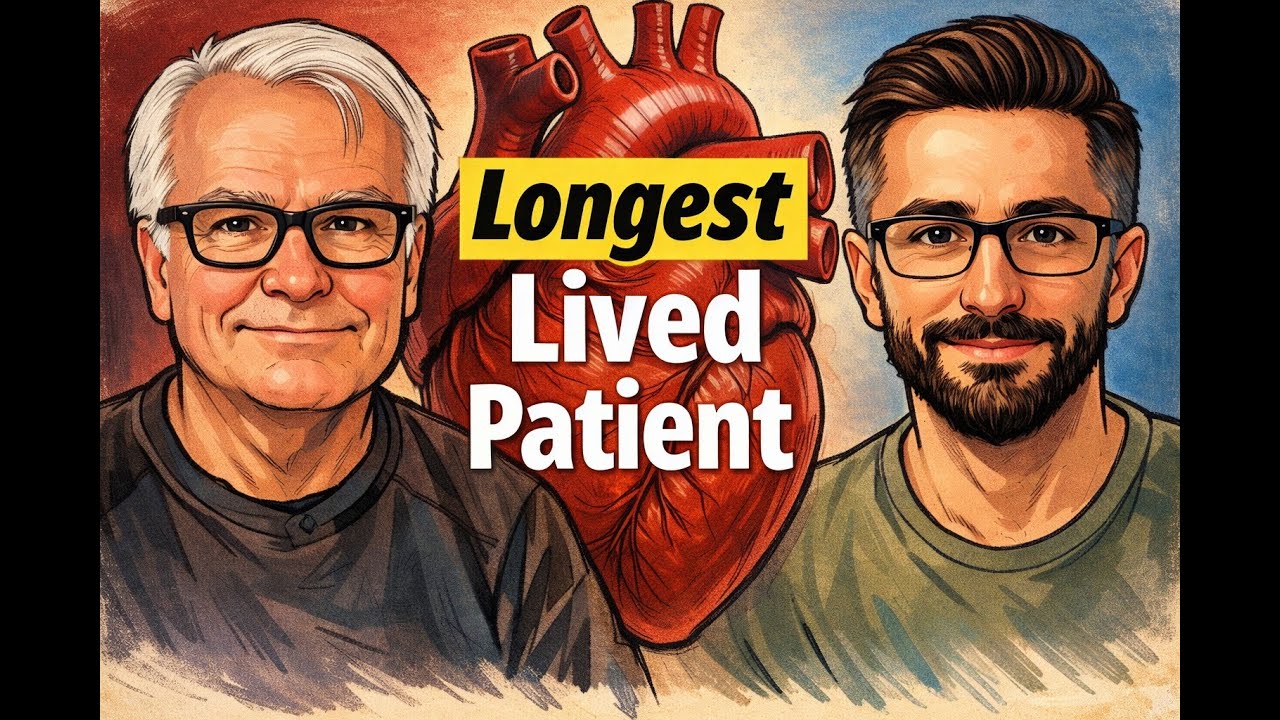
    Longest Lived Open Heart Patient: Part 1 - The Surgery That Changed Everything

    Full
    Longest Lived Open Heart Patient: Part 1 - The Surgery That Changed Everything artwork

    In 1952, a three-year-old blue baby was given weeks to live. On Dr. Alfred Blalock's 54th birthday, he and his team performed a groundbreaking surgery that would change cardiac care forever. 73 years later, Bill Causey is the longest living open heart patient in the world. This is Part 1 of a three-part series where Bill shares his incredible story - from Dr. Helen Taussig's fingertip diagnosis, to Vivian Thomas's pinky finger that fixed his heart valve, to waking up in a recovery room with an Easter bunny. This is the story of the surgery that started it all. Featuring: William "Bill" Causey, open heart surgery survivor since 1952 Host: Drezden Plotkin Keywords: congenital heart defect, blue baby syndrome, Blalock-Taussig-Thomas, Johns Hopkins, pulmonary stenosis, cardiac surgery history, CHD awareness

    Play Episode
    00:24:59
    Share:

    Hey everyone, this is Dresden. Before we jump in, a quick note, this is Part 1 of a three-part series. Today, you're going to hear an incredible story from 1952. Let's get into it. This is The 1% Heart, a podcast about the millions of people living with congenital heart defects. In this episode, we have the opportunity to speak to William "Bill" Kasi, the longest living open heart patient. Before we begin, here is my normal quick disclaimer: Nothing said here constitutes medical advice. These are our own opinions, experiences, and stories. I also want to include a trigger warning as we will discuss medical-related problems. Listener discretion is always advised. With that fun out of the way, Bill, thank you so much for joining me here today. Drezden, thank you for having me. Now, I have struggled a lot with how to properly introduce you because you have done so much, and you have seen so much for open heart patients, or for congenital heart patients in general. Do you mind giving a brief introduction and your relation to the community? Sure. Well, I currently reside in Washington, D.C. I've lived here for almost 60 years. I was born and raised in Baltimore in 1949, and I was fortunate to be born in Baltimore because of my congenital heart condition. I was living about 3 miles from the Johns Hopkins Hospital. The other reason I was very fortunate when I was little was that my mother was a nurse. She was an Army nurse in World War II. In fact, she was a Captain in the Army during World War II. My father was a Sergeant in the Army. So my mother always used to say that she always outranked my father both in the military and in life generally. But when I was born, my mother could tell fairly quickly that something wasn't right. I wasn't like any other normal three, or four, or five-month-old baby. I seemed to be a little slower than normal. I wasn't crawling around, and she was going to watch me carefully because she could tell something was wrong. She had a suspicion that maybe I had a congenital heart problem because I had the classic blue baby symptoms. I had bluish fingernails, blue lips, and she suspected it's some kind of a congenital heart problem. But she watched me closely, and after about two years, she could tell that things were going downhill pretty quickly. I was not walking and moving around. I was lethargic. I wasn't responding quickly to stimuli around me. So she decided to take me to Hopkins, and I had an appointment with a pediatric cardiologist by the name of Helen Taussig. Dr. Taussig was probably, at the time, the number one pediatric cardiologist in the world. She had worked very closely with another Hopkins doctor named Alfred Blalock to develop what was known as the Blalock-Taussig blue baby operation. Dr. Taussig was truly a remarkable person. She had her own incredible life story beyond just medicine. In fact, there's a biography that has just been written about her, a great biography by Patricia Meisel. Dr. Taussig was born basically deaf, and I think she had scarlet fever when she was little. So when she examined me, she didn't use the stethoscope because she couldn't hear. She used her fingertips to hear my heart murmur, and she diagnosed correctly that I had pulmonary stenosis. My pulmonary valve wasn't functioning properly, and I wasn't getting the proper level of blood supply between the heart and the lung. That's why we were called blue babies because we weren't getting enough oxygen in our blood, and our blood wasn't bright red; it was a bluish red. Dr. Taussig saw me and followed me very closely for about a year. She could see that I was quickly going downhill, as most babies two and three years old at that time were who had pulmonary stenosis. She went to Doctor Blalock, and they were obviously very close already. She said, "You really need to operate on this kid. He's got pulmonary stenosis. It's clearly a bad pulmonary valve, and I want you to see if you can go in and fix it." Blalock, according to what Taussig later told me, looked at her and said, "Helen, I don't do three-year-olds. They don't survive the anesthesia." And she looked back at him and said, "Well, you know, if you don't operate on him, he's going to die anyway." He said, "Yeah, I guess you got something there. Let's do it, Helen, for you, I'll do it." So on April 5th, 1952, which happened to be Blalock's 54th birthday, a Saturday morning, they took me into the operating room at Hopkins. Dr. Taussig was there as well because she was very interested in my case by that point. Of course, with Dr. Blalock was Vivian Thomas, who was his surgical assistant that had worked with him for probably over 10 years. There's a great story of how Blalock hired Vivian Thomas, and if we have time, I'll get to that story as well. But the three of them were there. This is before the heart/lung machine; the heart/lung machine wasn't developed until about '55, '56. They put me on a block of ice to get my heart rate down. Blalock knew he only had about, at most, maybe 15 minutes to do what he had to do once they opened me up. So once they got my heart rate down, he did his signature horizontal incision and got to my pulmonary valve. They could see that it was working, but the valve itself wasn't working clearly. It wasn't smooth. Blalock turned to Vivian Thomas, who was always over his right shoulder, and he said, "Vivian, take a look. What do you think?" And Vivian looked at it and he said, "Let me try something." He took his baby finger, because he had surgical gloves on, he took his baby finger and he manipulated the valve. He poked you in the heart. Yeah, right, right in the heart. He manipulated the valve, and they then watched it for about a minute, and he could see that he got the valve to function, what it looked like to be normal, and it just needed a kickstart, that's what I always say. After they looked at it for about a minute or so, Blalock said, "I think that looks pretty good." And they sewed me up. Of course, when they... I forgot to mention, when they did my surgery, they had to break my sternum to get to my heart, which they did to a lot of kids back then. So they broke the sternum, they didn't cut it. Yeah, I think they... I don't know whether they cut it or I don't know how they broke it, but it was damaged because I had a second surgery about that in itself. But they finished the surgery. They sewed me up. Blalock went to his 54th birthday party after that, and I went to the recovery room. The experience in the recovery room is my very first recollection ever. It was Easter time. I was in a crib in the recovery room. To me, now thinking about it, it was like a boxing ring, but I'm sure it was just a baby crib. There was somebody running around dressed up like an Easter Bunny, and it scared the hell out of me. That's my very first recollection ever, being in that baby crib in the recovery room with that Easter Bunny. So what a way to be introduced to the world, right? I think there's something poetic about your life beginning after the surgery. Well, I've always regarded Easter as one of my favorite holidays because of that. So it happened that I recovered very quickly. Of course, I would see Dr. Taussig periodically after the surgery. She followed me very closely. I'm sure I was seen by Dr. Blalock a couple of times after my surgery, although I don't have a recollection of that. I don't have a recollection of ever meeting Blalock other than in the operating room, and I don't even remember that. But I was followed by lots of cardiac surgeons and cardiologists at Hopkins over the years after that. My mother, of course, who was a nurse, she followed me very closely too. My mother realized, I think, that not only was I coming out of a medical surgery experience, but that there were always mental health experiences that went along with that. She told me from the first days I can remember, she said, "Look, you indeed are very different. You've got a scar to show it from other kids, but you're not special and you're not better than other kids. So just grow up to be a normal kid. Take care of yourself. Make sure that the doctors look at you every now and then and listen very carefully to them, but just remember you're just a normal kid." That stayed with me. As I grew up through my early years and into elementary school, I just tried to blend in with every other kid that was there. Now, I knew I was different because I had a scar, and every now and then kids would look at my scar, and I would be aware of that. But it really didn't bother me. I was very active. I have lots of friends. I was very engaged in elementary school. I played a lot of sports, went on into high school. I played baseball in high school. The only thing I found that I had a physical limitation to doing was swimming. I just, for some reason, well, I guess the reason was obvious, I just didn't have the heart-lung capacity that you need for swimming. And I never was a big swimmer, but I would run, play ball, and do all the other things that kids would do. I'm going to, before we go to the next part, I'm going to jump in here. Just for those of us who don't know, the Blalock-Taussig-Thomas procedure, the three doctors you mentioned, Thomas getting his honorary doctorate afterwards, is a very big deal for the congenital heart community. Their procedure, their approach, I mean, before this approach was happening, patients like you and other cyanotic, other blue babies, would live very short and limited lives. Am I right in saying that? Oh, absolutely. I think most of them died within the first year or two. And this, if they... if they survived surgery at all. And what blows my mind, just as a comparison, my open heart for a repair of my pulmonary valve was on April 15th, 1996. That is, what, 40... You said yours was '52? '52, yeah. So that is 45 years afterwards. 44, I can do math, I promise. They didn't put me on a block of ice. They didn't cut my chest horizontally. They didn't manipulate anything with their finger. They went straight down my chest. They cut through my sternum. They repaired the valve with synthetic material to fix the pulmonary, pulmonary valve stenosis. This was, I was six months old when my mom said to my dad, "Does he look blue to you?" And by the next day, it was done. There was no waiting, watching, following up. I was six months old; they found the issue, they took me to one hospital, they found the issue, they air-vac'd me to a second one. And I have a funny story there where my dad hopped in his car and beat the helicopter to the second hospital from one part of Phoenix to another. But that's, that's something I probably shouldn't say. The change in 40 years, from deciding whether or not to do your surgery, saying you wouldn't survive anesthesia, slowing your heart by putting it on a block of ice instead of a bypass machine. Just the comparison is blowing my mind. Then the next, and so what I touched on there was the importance of this procedure. There's actually a great, is it, *Something the Lord Made*, with Alan Rickman in the movie about this? Yes. Very, very good movie. Alan Rickman is Severus Snape, for those that don't know. You talked about your mom's approach to mental health. A big part of what got me involved in the congenital heart community was how my parents were not told about mental health. Not told. We were always told I was one in a million. No one ever told us that there were one in 100 kids born with congenital heart defects. If it was not for my little brother, I think I would have been a lot different because my little brother was barely a year younger than me, and he gave me someone to keep up with and compare myself to. So while my parents were, I'll say this gently, they had their own trauma from the surgery and the lack of resources they got afterwards. I think if it was up to them a lot of the time, I would have been put in a plastic bubble, and me and my little brother just didn't let that happen. But that takes me to the mental health aspect. I'm wearing my Cardiac Neurodevelopmental Outcomes Collaborative shirt right now. They are a great research and provider organization that the doctors and PhDs, nurses, anyone who does work in the CHD mental health space, and the problems they're attacking now, are remarkable. Making subtle changes during the early, during surgeries and during the early life of a patient to keep their brain healthy and keep their mind healthy both physically, physiologically. But it sounds like your support consisted of your mom telling you you were normal and that you're not special. Is that what I heard? Absolutely. My mother did not put me in a bubble. She pushed me out into the street and she said, "Get out there and live your life and be, you know, be thankful that you're alive because a miracle did happen to keep you alive. But just be like any other kid and you'll have a much better life." I followed that guidance, and it was one of the most important things, I think, my mother and my father, you know, taught me. Yeah, you mentioned the movie. You know, there are two movies about the Blalock-Taussig-Thomas shunt. One is called, one is based on Vivian Thomas's memoir, *Partners of the Heart*. It's his autobiography. In fact, there's one page in the autobiography where he shows about how he used his finger to get valves to operate. So I'm not making it up. And then PBS turned it into a movie, *Partners of the Heart*, which you can still get on YouTube. But let me tell you something about Dr. Taussig before I forget. She was truly a remarkable woman. She was, I think, the first woman to graduate from Hopkins Medical School. She tried to get into Harvard Medical School, and they wouldn't let her in because she was a woman. She had a fabulous garden at her house. She was almost a professional gardener. She was always very, very interested in her patients, not only at the time of their medical interface with her, but after their surgeries and how they developed. I remember one story, 1973. Now this is 20 years after my surgery. I was up in Baltimore. I was at my parents' home, and they happened to have a TV on in the background, I'm not sure why. Dr. Taussig had just retired from Hopkins, and she was being interviewed on a local television show. Of course, I stopped and sat down and watched with all and wonder. That night, I wrote her a letter, before email and all that. I wrote her a letter, and within a week she wrote me a letter back with her 88-cent Eisenhower stamp on it, and I still have the letter, of course, right here. I just want to read a part of it to you. It's dated October 11th, 1973. And it says, "My dear William," she always called me William. "My dear William, your letter to me after watching my profile on television was one of the nicest letters I have ever received. You're quite right that learning from my former patients that they are fine and doing significant work," and she underlined the words "doing significant work," "means the world to me. Thank you for taking the time to write. You truly, you truly warmed my heart. Sincerely, most sincerely, Helen Taussig." So not only did she fix my heart, I was very happy to be able to warm her heart. Needless to say, I have this letter today. I keep it stuck between the two big volumes of a box set called *The Alfred Blalock Papers*. I've always been a book collector all my life, and I was at a book auction many, many, many years ago. It's probably been almost 40 years now. I noticed a big two-volume box set sort of on the floor. I went over to take a look at it, and lo and behold, it was the papers of Alfred Blalock. Needless to say, I grabbed those up in a heartbeat, so to speak. I still have those books today, and I put this letter right between the two volumes of the book and that's where I keep it. My wife says I should get it digitized because it's, it's, it's seen a lot of, a lot of, a lot of sunlight. Getting that laminated. Do everything to preserve it. Right, so the other story I want to tell, then I want to come back to say something about my followup surgery at Hopkins. My wife and I, she's also had some medical issues in her life, so we are very conscious of staying healthy, of keeping fit, working out, trying to eat the right things. We usually do a combination of a short nap and a long walk every day. We always would go to a health resort out there. You're in Phoenix, right, Dresden? Nashville, but from Phoenix. Okay. Well, we would always go to a resort in Tucson called Canyon Ranch, and we would go like for a week every August or September. I remember one year I was out there, this has probably been about 20 years ago. We were out, and I was in the men's locker room changing to go do a workout. There was a guy in the locker room, and he kind of kept looking at me. I thought, "Well, you know, this is a little odd, but you know, I'll get dressed and I'll move on." That night we were in the dining room at Canyon Ranch having dinner, and the same guy walks over to our table and he looks at me. He says, "He says, I want to apologize for staring at you today in the locker room. But," then he said, "Did you have surgery by Alfred Blalock?" I said, "Yes, in fact I did." He says, "Well, I'm a cardiologist, and all cardiologists recognize the Blalock incision." Because it's horizontal instead of... Because it's horizontal. Right. Now, not to be, not to feel left out, I did eventually get a vertical incision because ten years later after my surgery, Hopkins said, "We think we can fix your sternum," since it caused a depression in my chest. In 1963, I had my second surgery at Hopkins, and this time it was performed by a doctor named Alex Haller. Dr. Haller was an incredible person. This is a doctor I do remember very well. He was, when I knew him for my surgery, he was about 45 years old. He was completely bald. He was from Southern Virginia, so he had this thick Southern Virginia accent. He had a great sense of humor. He was wonderful with kids. I was, what, 14 at the time, and he said, "I, we think we can, we can repair that sternum." Well, they operated on me. Unfortunately, they weren't able to repair it as much as they had hoped. But Doctor Haller became a lifelong friend, and sadly he passed away in 1991. So I had, not to feel left out, I have a vertical incision and my Blalock horizontal incision. Best of both worlds. I've had three surgeries. The first was open heart, but the other two, the stents, they went through my leg. They went through an artery in the groin and just one, maybe two stitches I think at most afterwards, and that, that was it. I mean metal in my heart, but in terms of the physical effect, the open heart scar is the only scar I can find. Well, Dresden, not to let you take the better of me, but I've also had that too, because about 20 years ago when I was going to the Mayo on a fairly regular basis, and I'll get to that as to how that, how it developed that I got to the Mayo. They apparently, I've always had a small hole between the chambers in my heart as a lot of CHD patients do. And Mayo, my doctor at Mayo, her name was Carol Warns, Dr. Carol Warns, she was the top cardiologist at Mayo. She said, "You know, Bill, you're here for your annual check-up. You want to stay a couple days extra because I think we ought to fix that." So they did. They went in through the groin and arthroscopically fixed that hole in my heart which they, they were able to close. So I've had all three, and I, I hope I don't add a fourth one to it. I'm really happy you mentioned that because your, your story means a lot to me. I mean, I mean, I don't think we've said this, but you are the longest living open heart patient, and in terms of the parallel, and you're 76, in case we didn't mention it. I'll be 77 in January. And I, I mention that because you don't sound like you're 77. And I want to make sure everybody listening now realizes just how impactful this all is, and I'm going to tell you why. I had the open heart for the pulmonary valve. I had two stents for the pulmonary artery, left pulmonary artery, but also the hole in the heart, the ventricular septal, ventricular septal defect—I had one between the two lower chambers that they stitched up during the open heart. So not only is, is this episode important because we're able to talk about how care has progressed over time and just how lucky patients today like me are, but the parallels are dramatic for me. So I'm thinking your job is to go from 77 to 100, 150, and my job is to beat you. Well, if I go, if I go to 100, we're going to do Volume 2 of this podcast. That's, it's a deal. It's a deal. And that's it for Part 1. Next time we'll hear what Bill did with the rest of his life after surgery. Thank you guys for listening, and I'll talk to you soon.

    Click anywhere to view episode page & discussion

    Episode 11: Women's Health & CHD

    Full
    Episode 11: Women's Health & CHD artwork

    Can medical caution cross the line into control for women with congenital heart defects? Jillian Tait shares her pregnancy nightmare that turned collaborative care into a medical control battle, while returning guest Aliza Marlin contrasts with decades of positive ACHD experiences. Learn four practical advocacy moves you can use tomorrow: ask for time, request evidence, walk out of bad appointments, and get second opinions. Guests: Jillian Tait (@jilliantait) | Aliza Marlin | Duration: 53:43

    Play Episode
    00:53:43
    Share:

    Drezden Plotkin (00:01) This is the 1 % Heart, a podcast dedicated to the millions of people living with congenital heart defects. In this episode, we're going to dive into a crucial topic, how patients, particularly women, often face dismissal and skepticism from healthcare providers. Joining me today are two remarkable women, Jillian Tate, all the way from the UK, and Eliza Marlin, an American and fan favorite returning from our very first episode. We're going to discuss their experiences navigating treatment and compare perspectives from both sides of the Atlantic. Now, Before we begin, here is my normal quick disclaimer. Nothing said here is medical advice. These are our own opinions, experiences, and stories. I also want to include a trigger warning as we will discuss medical experiences and some trauma. Listening discretion is always advised. With that out of the way, Jillian, Eliza, thank you so much for taking the time and scheduling with all these different time zones going on. Jillian (00:53) Thank you for having us. Well, me, I can say. Aliza Marlin (00:55) Yeah. Drezden Plotkin (00:56) Could you both just briefly introduce yourselves, give us some background on your special hearts? Jillian (01:00) Yeah, so I'm Jillian. I'm nearly 30. I currently live in Edinburgh, but I'm Canadian, so my accent doesn't really line up there. My parents are from Scotland. They moved to Canada. I was born there. And then in the past five years, I moved back to the UK to study, met my husband. Now I'm like a souvenir, I guess I'm stuck here. That's fine. But in terms of my heart, I have Epstein's Anomaly. that included supraventricular tachycardia, Wolf-Parkinson's white disease, and an atrial septal defect. And these were all caught when I was born. And I've had seven surgeries to attempt to fix and rectify it. Aliza Marlin (01:35) Well, I'm Eliza Marlin. Thank you so much for having me back. I was on episode one and it was an incredible experience and I'm so happy to be talking to you, Dressen, of course, and to be meeting you, Jillian. So this is a great day for me. I am based in New York City. My accent goes with my location. born and bred here. I am nearly 57. I'll be 57 in two months. I was born with aortic stenosis. that was diagnosed at birth. Just a few hours later, the doctor said they heard something. And I think, too, they actually gave a name to it. I've had multiple surgeries, some procedures, but I'm doing well. I live in a place that has not just adequate or appropriate care, but outstanding care for an adult with a CHD. And I'm doing well. So happy to be here. Drezden Plotkin (02:25) Thank you both for that. And I think I'm going to remember the souvenir line for a while. Now I'm going to give one last disclaimer before we dive into it, but we're going to talk a lot about women's health here, how to advocate for yourself in special situations and the potential for dismissal, infantilization, and just how to make sure you get bodily autonomy. But let me first talk about the elephant in the room. I'm not a woman. I have never been a woman. I have never had to deal with female problems. Now I've... been a CHD patient for my entire life except for the first couple of months. But I'm very aware of my limitations for this topic. So I want to ask questions and I want to ask the right questions. But there's a thin line between comparing it to my experience and mansplaining as a large white man living in a very... beneficial society to large white men. So, Eliza, thank you so much for joining to make sure I asked the right questions. And to both of you, if I'm missing something big, a big comparison, feel free to dive in with a better question. All that to say, Julian, I understand there has been a significant life event recently that's really made this topic front and center for us. Do you mind elaborating on what's going on? Jillian (03:36) Yeah, so a year and half ago, I had my little boy. It was very exciting because I was excited to be a mom. So basically my big thing is CHD and pregnancy because growing up, they never really talked about that much with me. I think when you're a kid, they don't really want to burden you with thinking about that. And if you're someone who doesn't choose to go that route, they don't want to make it, ironically, they don't want to make it for you. a pigeonhole, I suppose. But when I was transferred to the adult congenital clinic in Toronto from SickKids, which is like a big hub, it was good. I moved to Peter Monk, which was great because it's a big heart research centre. I was under the care of Dr. Oshelin, who was one of their chiefs in cardiology, who was great. And then one day I had this new doctor. In the UK we called him a consultant. don't really... know what we're calling them in North America, just, I don't know, big thought. And it was Dr. Swan who's lovely. And she started talking to me about pregnancy. And I'm thinking like, girl, I'm single. But she's like, you know, it might be a topic we need to start broaching just with your age and stage in life, which was reasonable. And that was fine. And we had some loose conversations around maybe time constraints and realistic expectations in pregnancy, which was all fine and dandy. fun fun aside is I had moved to Belfast to study to be a midwife and when I was there Dr. Swan said actually I've got a colleague who I know who's in Belfast I'll hook you up with him which was great and then in Belfast I met my husband and he got a job back in Scotland and the doctor in Belfast said you'll never guess Dr. Swan's moved back to Scotland so then I got to have the same doctor who came overseas which was great for continuity which was really lovely So I've been seeing her and I got married and we discussed having a baby and she once again emphasized the sooner the better just because we know where your heart is now and you don't want to wait too long in case maybe something changes and then it wouldn't be favorable in terms of carrying a pregnancy. And that made sense to me. So we were really fortunate. We were successful with our pregnancy and that was all fine and dandy. And I was really fortunate in that my pregnancy was incredibly straightforward. I had no complications. I didn't need any medication. I didn't have any hospital stays. I had the extra monitoring that you'd expect for somebody that has a more high risk pregnancy, whether that's because of your heart or even if you were just like an average woman who developed gestational diabetes and you have a couple extra appointments. I had a planned C-section at 35 weeks because they just wanted to make sure that I'm four foot 11. My husband's five foot six. Our kid was never going to be big. He was small, but he was growing just small for comparative to other babies. So he was born at 35 weeks and was chunkier than we expected. So that was a nice surprise. And that was all well and good. However, the crux to all of this is that in my pregnancy, I had been asked about having my tubes tied. because my healthcare team felt that there was a high risk to me if I were to have a second pregnancy. I had been offered this topic early on and they kind of said, it's a early, like we'll approach it a bit later. Mind you, my son was born in December and in October, there's in my medical notes that I was not in a mental state to make that decision. However, one week before my son was born, I was asked to sign a consent form for the procedure. This, I think was wild, but I signed it anyway, had the tube tie, which actually wasn't a tube tie, it was a complete removal of my fallopian tubes. And that's two different procedures. You do a full removal if someone's at risk for something like cancer or something really intense and invasive, whereas a tube tie where they just sever your fallopian tube can be repaired and they can stitch them back together at a later date if you change your mind. So what I signed for and what I got are two different things. Yeah, and now, you know, my son's a year and a half and I'm still fighting with the healthcare system here about the... Injustice I feel about how all of this was handled and I'm sure we'll go into more detail about the lack of voice and autonomy in the situation when other people are weighing up the pros and cons for you without you being involved in the discussion. After the fact I said I'd like to have IVF because you know I'm trying to get a car from point A to point B and they've blown up the bridge so I need a boat and they've decided on my behalf that it would not be favorable and that the healthcare system here would not be entertaining the idea. Drezden Plotkin (08:15) That is a lot to take in. Terribly sorry that that happened. There was more than one time where I just wanted to say what the fuck, but I held myself back. ⁓ Yeah, I can imagine. I can imagine. So, and you can tell me if I'm asking a question I shouldn't be asking here, but they decided that you weren't in a mental state to have this conversation. Jillian (08:17) Yeah, was hefty. I've been seeing it a lot. Mm-hmm. Mm-hmm. Drezden Plotkin (08:38) Now were you experiencing any mental stress from the pregnancy aside from what was normal or do feel like they made that judgment because you weren't answering the question in the way they would have wanted you to? Jillian (08:47) I don't know if I have to think back. It's probably that they had mentioned, have you thought about it? And I was like, I'm not thinking about that right now. My concern is, am I healthy as a baby healthy? Which was summarized as not being in a mental state to make the decision, which to me is fine because I think that's acknowledging that that isn't something I should be. That's something so permanent and so big that if my mind isn't thinking about it in a way that's, if I don't have the mental space and time to to considering that procedure, it's fair enough to me to document that you're not in the mental space to have a conversation surrounding that. But it's ironic to me that then a week before my scheduled section, you think I'd be in more of a mentally stable state to consent to that. then, yeah, it was just a bit bizarre to me when I looked back on the notes to see that kind of timeline. Aliza Marlin (09:41) Is it okay if I ask just a few of the hundreds of questions that I have for you, Jillian? Because I'm dignant right now at your story. So let me just make sure you were 28, 27. Drezden Plotkin (09:43) Yes, please, please do. Jillian (09:45) Sure. It was 28 by the time he was born, Aliza Marlin (09:57) Okay, and when you were dealing with your healthcare team, does this healthcare team include Dr. Swan or was it a separate healthcare team? Jillian (10:05) So I had Dr. Swan who is one of the consultant cardiologists. I had another consultant cardiologist, two consultant obstetricians and a specialty nurse. So usually at my bigger appointments where we're kind of doing a review of how everything's looking, I had four like very experienced higher level doctors with me, which is an important piece of the story because when you've got four people kind of telling you, should probably consider this, you should probably do this one. and using language like, you know, you want to be around for this baby, don't you? As if to imply that if I were to have a second pregnancy, I'm guaranteed to not do well, despite the evidence in this pregnancy to show that I was okay. And I feel like you're making me feel like a shitty mom. I don't even know what my kid looks like, which I thought was quite emotionally manipulative. And, you know, in the notes, they'll say things like, well, we offered to have a... you know, IUD contraception. But when you say when your your dialogue is heavily weighted and you want to be around for this baby, you want to be there and have energy for this baby, you want to be present, all these things, and yeah, sure, you can get a coil if you want, but like, a permanent solution might be better just while we're in there anyway. Felt unfairly weighed. Aliza Marlin (11:17) Europe. You're pregnant, you're emotional. Like that is just the state of a woman when she is pregnant. I have not been pregnant before, but I have been around enough pregnant to know that like there are hormones everywhere. And on top of this idea of your responsibility changing to take care of another life, that's enough for you to be contemplating everything else other than a choice like this. When they first discussed this, Jillian (11:22) Mm-hmm. Aliza Marlin (11:46) when they first brought this up to you and they asked you to sign this permission slip for your life, a week before, did you feel as though you had an opportunity to go back and really discuss this with your husband or discuss this with other people who were helping you to weigh decisions in your life? you feel as though you had enough time to consult with the community that supports you? Jillian (12:09) It's interesting question. So my husband didn't want to offer too much of a voice to it because I think he was worried about crossing the line of like, he wanted me to make a decision for myself and he felt the best way and I'm sure Dresden, you can understand as a man, you're kind like, I don't know, it's you and your body. I'm not too sure. So I think he was in a sticky spot either way. And we've had some conversations after the fact and he's like, I probably should have had more of a conversation because it's our family. But at the same time, it's your body and I don't want to influence a decision that's so impactful. So, I mean, we had a very light conversation, very sweeping conversation. That's kind like, should I, shouldn't I? He's a doctor, ironically, and was like, from a safety perspective, maybe, but like, you know, it's up to you. So, I mean, a little bit. But, you know, looking at information now, fun fact, having the complete removal of your Philippine tubes, by the way, increases your risk of heart disease by, I think it's either 10 or 20%. And I'm like, why are you not telling me this information? That's a pretty important piece of information to tell someone who you're advertising this to as an advantage when they have a heart condition. To omit that, it's, think it's 10 % chance of heart disease and a 20 % increase in mental health decline. which wasn't told to me and I'm finding this out a year and a half after the fact. Aliza Marlin (13:33) Because you're preparing for a new life, you don't have time to Google it in a week. Drezden Plotkin (13:34) What? Jillian (13:36) I know. And I think I just, I'm like, I don't really care. I was like, oh, call you in there, get rid of my uterus. I don't have a period either way. That should have been a red flag. Clearly I'm not thinking straight. Um, but yeah, it was kind of very much in the mindset of like, oh, like whatever it's fine. I just really want me to be okay. And the baby to be okay, because there's been this whole crescendo of like, Ooh, is the baby okay? Have you been okay? And every, you know, couple of weeks it's an appointment to check, is he okay? Are you okay? And we've both been fine, but there's that, um, undercurrent of like, something could go wrong. So I think that really like foggied my perception or how I interacted with the conversation. And then, know, after the fact, they were saying things like, know, because my mental health absolutely plummeted. And they're like, yeah, we anticipated that. I was like, okay, so why was there no counseling beforehand about that impact? Why was there no cautionary counseling set up? support me after that because I'm 28. I'm younger than the average age of people having kids. You know, like, and in the States, I know, because I've looked this up, if you are trying to get your own family doctor to sign off on you having a tubal ligation, there is a rigorous criteria you need to go through to make sure that your patient is fully informed. And there's a one month cooling off period, nevermind one week and four doctors saying do it, do it, do it. So It's just interesting to me the contrast when other people feel quite strongly about something and your voice feels pretty small. Drezden Plotkin (15:11) I want to put a question in here too, because you mentioned your husband's a doctor and that he didn't want to influence your decision too much. he said later on, he probably should have spoken up, but it sounds like, and you can tell me if I'm jumping to conclusions here, but this, you called it emotional manipulation. I call it medical gaslighting for you to make a decision. the information you were given that you take back to him. Jillian (15:14) Mm-hmm. Drezden Plotkin (15:38) Or if he's there in the room too, I assume, but it sounds like he was probably given, you know, if he has the same information, that's probably influencing his willingness to speak up because it sounds like even if he wants to make an argument one way or another, it's your life on the line. And it's almost as if it doesn't matter how it's a doctor, even a patient your whole life. doesn't matter how educated you are with such a important life development going on. that we're all susceptible to this medical provider influence. It doesn't matter how much we know, but how easily we're persuaded when we're in a very emotional state trying to make the best decision for a family coming in and for everyone we care about. that your read on it too? Jillian (16:21) Yeah, I think that's really fair, especially when you consider that he'd be quite junior comparatively to the other ones in the room. there's an element of probably not wanting to seem like you're coming in Mr. Big Balls. I've got an idea and an opinion. So I can appreciate that. Aliza Marlin (16:31) Mm. Respect for an elder, like respect for people who have been in the career longer, I'm sure. Jillian (16:48) Mm-hmm. So I try and give them a bit of a wide berth with that, but is it berth or girth? I don't even know. But anyway. Drezden Plotkin (16:55) It's birthed like a ship. Jillian (16:58) I thought it's taken a while. It really is. Thank you. I thought that too. And I was like, am I just in the wrong mindset to make that line? But it's taken a while to get to a point where I can look back and see that for him. think early days I was quite frustrated and felt like it was partially his fault that I didn't have the opportunity to speak up because you kind of feel like your partner should be your advocate. But you're right. In some situations, you're kind of you can. It's easy to feel. Drezden Plotkin (17:00) Which is kind of a pun here. Jillian (17:29) hands off. Drezden Plotkin (17:30) Yeah, it's almost as if you're both being railroaded by the same information, you have to digest it completely differently. Jillian (17:36) Exactly. Yeah. So I think it's fair to what you were saying there about the medical gas lighting. Though I tried to put in a complaint and I tried so you can put in a complaint to the hospital, which I did. And then they came back and basically said, sorry, you feel that way, but we think it was fine. So then I escalated it to the ombudsman who reviewed it with a third party and they also feel like it was a just situation. And so they were closing the case. And I have no other recourse after that, which was quite frustrating. Drezden Plotkin (18:07) No recourse. Part of me wonders if the reason that we have such fail safes in place in the US versus the UK is because if the hospital makes the wrong decision, they can get sued for a lot of money. And when you say no recourse, it means you escalated to their independent reviewer and the independent reviewer of the independent reviewer. And that is your only recourse. Jillian (18:21) Exactly. Yeah, so interestingly, I'd also reach out to like a health law team and they were kind of like, that's not really going to get taken or go anywhere. So I think when you have universal healthcare systems like the NHS, when it's one big machine, there's a lot of cogs that'll turn to keep things going smoothly despite maybe some creakiness. And I think unless like you've been killed or you went in for an appendectomy and they cut off your toe, like there's going to be a way to justify it. And doing my midwifery training, which plays in well here, you learn a lot about good documentation and how different bodies are there to help back you and, you know, the insurance and all of this. So I think while it's great to have universal healthcare, there are some pitfalls and I think this would be a good highlight of that. Aliza Marlin (19:25) Chillion, subsequently, has anybody had a conversation with you about the truly medical reasons as to why a professional healthcare provider thought that this was absolutely necessary? And if they did have those conversations with you, were they convincing? Were they backed up by real data? I mean, you have a background. in a lot of this and you are clearly very aware of your own body and you are clearly very aware of what was happening to both your physical and mental state during your pregnancy. I just wonder, has there been any subsequent conversation about the real reasons and the real like medical facts behind why the best option for you was a complete hysterectomy tubal ligation? Jillian (20:19) Not really. So when I... So I had to see another cardiologist in Edinburgh where I live because Dr. Swan, she brought over the Scottish Adult Congenital Heart Defect Clinic basically. She's like, we don't really have one in this country. We should set up a centre, which is great. So she had done that in Glasgow, which was fine. It's not too hard to drive there, but they want you to have a more local cardiologist just in case something goes wrong. There's someone nearby with eyes on you. So I met up with... Aliza Marlin (20:38) Mm-hmm. right. Jillian (20:48) him in May or June, quite recently with Dominic, my husband, an obstetrician who I had spoke with was also there. And I was a bit surprised to see her because I thought this was kind of just a touch base, say hi kind of meeting. But it was to rehash that after a multidisciplinary team meeting, which I was not present at, they would not be supporting IVF. And I was kind of like, this is such bullshit. Why are you bringing me here to tell me this again? You've had a meeting about me without me, which is completely unreasonable. Who's advocating for me? And nobody's explained to me why this can't happen. And my answer was, it's very nuanced. was a great nuanced how, but there's no elaboration. And I got frustrated about the whole situation and ended up just leaving because I thought this is such a waste of my time. After I told them very explicitly how I felt about everything, because I'm tired of trying to be quite placid and civil because it's clearly not helping me much here. But anyway, yeah, it's a lot of, it's very nuanced. You just couldn't guarantee that the next time would be like this time, to which I say, but you can't guarantee that it wouldn't be. It could be, it could be just as smooth. Like, we don't know. And I'm sure you've experienced yourselves a lot of each, each person is different. So it's like, oh, you know. In general, heart defects present differently in every person. Like I was saying to you, Dresden, Bailey and I have the same heart conditions, but really different experiences and it's kind of shown up in our lives in different ways. So I find it unfair that because my own experience was quite positive with pregnancy, but then I'm being compared to people who maybe didn't have favorable outcomes or who they don't have enough data about. So rather than say, okay, we trust that you feel like you could do this. I'm saying I still feel fit and healthy. I don't think I've had any decline after the fact. So why is IVF now not an option for me apart from nobody wants to take responsibility or be liable if something were to go wrong? And if I've been thinking about this for a year and a half, that's a hell of a lot more time to give consideration to the outcomes of an IVF treatment and subsequent pregnancy than the couple of weeks I have to consider the ligation. So it just seems really unbalanced. But to answer your question, like no one's really sat down and said, listen, this is what happened with your heart. Here's what happened during the pregnancy, because we did all these scans and these things were threatening. I don't think there were any. And here's what's changed after the pregnancy that would make us worried about you having another one, because my echoes and my MRI have all been the same as they were pre-pregnancy. So I don't think anyone said anything to me because there's no empirical data about myself to support that. It's all risk aversion. Drezden Plotkin (23:36) And it's, risk aversion is a great way to describe it because there's a culture, especially here, there's a culture of risk aversion with cardiologists and CHD cardiologists. And I was speaking to a group of individuals and it was related to, physical activity and how much fitness you're allowed to take part in. What the doctors tell you do, you're allowed to do versus what you actually do and why they put those limitations in. And there's a lot of conservatism and Jillian (23:46) Hmm. Drezden Plotkin (24:03) I don't want to say fear, but just a risk aversion culture. And it challenges your bodily autonomy. And then this takes it to a whole nother degree. Eliza, if I'm not pressing too hard here, have you had similar experiences, even not with family planning, but just with disempowerment in medical care? Aliza Marlin (24:24) No, I haven't. I've been very lucky. I've been really lucky, but I've also had incredibly consistent care. I was in the care of one medical center from the day I was born until I was like 23, and then I've been with my adult CHD specialist for the past, you know, 33 years. So that most definitely... means that we have had conversation after conversation after conversation and it's never new. It's always evolving when I go in for my appointments. So I have always been very clear when I'm 100 % healthy and there's nothing going on and all the years where there are no changes, what I want my life to look like and what I'm willing to accept and what I'm not willing to accept that We have a relationship, my doctors, they haven't fought me on it. They've actually, they have been very willing to try and do their best to get me to that point where I want to be. So, and I know how lucky that is because that is not common. But I can't think of a moment where I did not feel as though I could have a reasonable conversation about being told no. Right? And I've been told no, right? You can't jump out of a plane. You know, of course, stuff like that. I'm not going to jump out of a plane, by the way. But, you know, random things like, you know, if you have to take it easier or if there are recommendations to slow down for something or if you need a procedure and you don't feel as though you're ready for it, we have a good conversation about the pros and the cons and the the data is provided to me. So there has always been discussion. So I have never ever felt disempowered. I've always felt as though not only am I a good advocate, but the people around me are good advocates and my team understands what I need. And that is harder when one, you're in a country that is new to you. Two, you're with doctors and teams that are new to you. I have never had children. So I imagine if I had become pregnant and I had taken on an entire maternal fetal team, that would have been a tough time for me to see that everybody agrees and understands the way I feel. So I've never had to take on new people like that. pregnancy is a time of incredible change in your life. And it's hard enough dealing with a chronic illness. Jillian (26:57) Yeah. Drezden Plotkin (26:59) And I'm happy you had a good experience. a of me, a part that stuck out to me was it's all been at the same clinical clinic, the same kind of hospital system. And I wonder from a completely different avenue here, I had a hernia surgery in my early twenties and the... extent of the interaction between the surgeon and that specialist and my cardiologist was he sent me to my cardiologist for permission. My cardiologist had me do a battery test said yeah you're good to go. I don't think they talked aside from that and then a couple years ago or a year and a half ago I had my I a major surgery on my tricep to get it reattached and it was all within the same clinic so the Surgeon knew my cardiologist by name and the extent of their interaction was is he good to have the surgery? Yes. Okay, cool But I feel like maybe and I could be jumping to conclusions here. So anyone listen to this huge caveat but the fact that the doctors Knew each other knew they'd have to face each other again might have played a role to your point Eliza with having everyone at the same clinic But that could also be taken too far where they, in Jillian's case, where they make these decisions together in a back room and don't elaborate on it and don't explain themselves. just, a group decision from a cohesive collective where maybe if one of them is really pushing a decision and the others know that they're gonna have to deal with this individual day in and day out, they're gonna be. arguing differently or not as thorough. Aliza Marlin (28:35) And Jillian, I will say that is where this becomes unacceptable, right? The way that you were treated and this behavior and whatever it is that decisions they decided to make, completely unacceptable. And I have known a lot of men and women who have been in not exactly your situation. This is pretty extreme. This is a pretty extreme situation. but who have been in situations where their medical providers have made decisions for them that they didn't agree, they didn't feel as though they could speak up. We grow up with this incredible respect and love for our cardiologists. I know that both of you have felt that way about your pediatric cardiologists, your adult cardiologists at some point, so that you look at them in a very powerful way. So when they're making recommendations, your first thought is not to question them. Your first thought is, they're going to save me. Right? And then when you walk away and you have a moment to really consider these things, you then take into consideration your whole life. Right? It's not just that moment in the doctor's office. It's like, what happens after you leave the doctor's office? What happens when you're with your son and, you know, he's right over there and he's like, mom, mom. you know, a year and a half or whomever or you know you have a night ahead of you that's going to be busy or a night ahead of you that's going to be really wonderful. But it's the fact that we hold them in such esteem that and you did not have the opportunity to step back from that esteem or those decisions and really kind of consider a week to consider what this meant. and you didn't have the information. your doctor shouldn't be relying on Google. They shouldn't be relying on you to do all that information. If they're going to throw a decision like that at you, then they have a responsibility to provide you with all of the information and to sit with you and let you ask questions once you're ready to ask them. Jillian (30:38) Yeah, I think so. And to that point, like when I was mentioning earlier, I kind of made offhand jokes about the procedure when they had talked about it while I was signing the form. And part of me feels like, do you not think you have a duty of care to hear that and go, something feels a bit off. You know, like when I was doing my midwifery training and visiting moms and, you know, even in birthing suites, when people are having their babies and someone says something and you think, I don't think they quite understand what what's happening here. So then you ask again or you offer other information or you can say maybe this isn't the best choice. Why don't we you know if this was a Monday why don't you come back in on Wednesday? But you know that that didn't happen and I think also to that note there was a little bit of I'm assuming. They had assumed that I would have more informed because. my midwifery background, like that I would know a lot to do with pregnancy and childbirth and procedures surrounding that, but like a midwife isn't an obstetrician. If you tell me tubal ligation versus a sphacondectomy, I can never say the word for complete removal. There are two different procedures and if in the fine print on your form you say something like, surgeon's able to pick what they think is best at the time and then you think the more extreme option is the best and then don't tell me why, And a year after I'm thinking, shit, what did I actually have done? If I go ask for a private opinion about getting my tube tie reversed to have them reconnected, what if they do a scan and they're not even there? I'm going to look like an idiot. So I to request my medical notes to skim through them and go, actually, they're not even there to begin with. Drezden Plotkin (32:14) You weren't told afterwards that they took it to another level? Jillian (32:18) No. Aliza Marlin (32:18) You know, Drezden Plotkin (32:19) Okay, you weren't told, so they, how you sign for one thing, they did something else, you weren't told afterwards, you complained and complained, they justified their decision, and then after all that, they have you come back to the office just to tell you again that they were right and you were wrong. Am I getting that right? Jillian (32:36) You are, yeah. And then when I said, look, I found a solution, they're like, yep, no, we're not doing that. It's a bit... Aliza Marlin (32:43) You know, Jillian, this is not on you. This is not on you. There were decisions made on your behalf without you fully being informed of the consequences, the future, and without you having an adequate amount of information and time to digest this and make decisions that were best for you. This is not on you. You can think about, well, I have this midwifery background. Maybe that's what they thought. Fuck that. Who cares what they thought? This is not on you. Jillian (33:23) Yeah, when I try like, you know, talking about advocacy, and I'm trying to stand up for myself in these appointments saying, listen, like, what's done is done, like, I can't undo that. As much as I'd love to have a time machine and be like, fuck no. I'm trying to find solutions for myself. And then they're saying, we'll talk to the team, but why that's not a we talk to the team. It's you're going to talk to the team. And you're going to come back and tell me what the team said, but tell me who in that room was saying Gillian feels this way or Gillian's experiencing this. Nobody is. And I'd said to them, that is completely unfair to have these multidisciplinary team meetings about a team member who's not there. And I was insulted because the closing remark in the letter was, if Gillian were to become pregnant, we would happily provide care for her. First of all, you think I'm the immaculate conception? Like what's gonna happen? That's not gonna happen. But also do you think I want you to provide care for me after all of that? No. Aliza Marlin (34:02) And now. And now, a year and a half later, you have your son, which is wonderful. You are rehashing. You're going through this, and you're thinking about this, and here we are all talking. What is your mental state like? Do you feel as though this is keeping you from, do you feel as though it's keeping you spinning? Do you feel as though, I'm not asking, I'm not suggesting that you should ever let go of this, but like, Jillian (34:16) Mmm. Aliza Marlin (34:38) I can imagine something like this would be really, really hard to kind of like find something to distract you, like find things that are meaningful to you. How is your mental state now? You don't have to answer if you don't want to, but... Jillian (34:52) No, no, it's fine. I think it's an important tenet because like when Dresden was saying about the the the gap in discussion around mental health in CHD and women's health in CHD, this is a great overlap. It's shit. I think like after he was born, there was a lot of even for me brushing it off as postpartum feelings because you know, the emotions are up and they're down and it was kind of everywhere. So fair enough. But then the more I settled, as in the more time went on and you think I shouldn't be feeling this way still, but I did. And this is where it gets a bit sticky is I had a meeting three months after my son was born with the obstetrician to say my mental health is terrible. I'm so upset that this happened. Aliza Marlin (35:36) You requested that meeting. Okay. Jillian (35:38) I did, And it was kind of like, because someone I know, basically the thing that set me off, someone I know had been diagnosed with cancer and his sister was the bone marrow match to help with their recovery. And I thought, shit, my son's not going to have that. Like I can't offer that to my son. And that is a little bit of postpartum, like, know, extrapolating and being like, now this is about me. But I actually was, I was like, yeah, actually I'm really not okay with this. I'm really upset that this has happened. And then I was like, I need to tell them. you know, was the doctor that I spoke to was very compassionate and trying to listen and understand my feelings. And I'm sure she felt her hands were tied. She's like, literally can't do anything to fix this, but you know, we could, she put in a referral to a postnatal mental health service. And I was like, okay. And then I hadn't heard from them. So I spoke to my GP, my family physician. and they put a referral into the adult mental health service. By the time the postnatal mental health service picked me up, my son was nine months old, and they said, well, by the time we get started with everything, he'll be close to a year, and when the kid's a year, you don't qualify for postnatal mental health anymore. And I said, why is it my fault that you didn't pick this up six months ago? Okay, adult mental health said this isn't really our remit, so it's not in our park. So then I ended up paying out of pocket for the counseling services and then my husband and I've had marriage counseling about it because it's kind of thrown a screwball in that way. That doctor who I spoke to a couple months ago had put in a referral to a cardiac rehab psychiatrist to speak to them about how to move forward, which is fine. The part of me is like, I don't want to move forward because I don't want to be gaslit or spoke to by someone else within your system to try and convince me that this is all okay. When it's not, to pat my hand and say, sorry, this happened, what tools can we use to move forward? I'm not moving forward. It's not a bad haircut. It's something temporary or small. Like this is so impactful to my life and my family's future. So to keep getting brushed off, even when I'm asking for mental health support and I'm on, you know, an antidepressant because everything kind of hit the fan around Christmas time and my husband had to take time off work and everyone was worried. It wasn't great. So I'm more stable than I was then, but at the same time I'm like, why am I now being medicated to deal with the emotions that are coming off of the situation that I feel shouldn't have happened in the first place? It's almost like a band-aid fix and I'm, you know, screaming from a mountain top up. This is not going well. And it's a lot of like, you'll be fine. Just give it time. Aliza Marlin (38:10) Mm-hmm. Drezden Plotkin (38:11) Something you said in the beginning there about how you were writing off the emotions at first as postpartum and then you mentioned gaslighting at the end. It sounds like they were so, the opinions were pushed forward in such a way that not only did it gaslight you but it led to you invalidating your own emotions until you figured out what was going on and until you went and took care of it. I point that out because there's a lot of people that might not have had that Not not that they weren't weren't able but yeah something might have caused them to not be able to figure it out on their own or that and it could have really I mean it's done a lot of damage and it could have been easily so much worse just because of the way that the groundwork was laid and Jillian (38:55) Yeah, I think I'm really lucky that my husband's very in tune with how I'm feeling about things. And he can tell if I'm having an off day or whatever. he would be like, can you so in the UK when you have a new baby, you get a health visitor, it's someone who comes and does like baby well checks at your house, which is nice. And they need like their weight and everything. But they're also there for the mom to make sure that you're okay. And he's like, if you don't call the health visitor, I'm calling the health visitor because like you're not doing well. So to have someone else who knows you well enough and understands the situation enough to say like, this is like causing concerns now. I think I was really fortunate for that. And my parents, despite being overseas, were also very involved. My in-laws are really lovely and they're 10 minutes down the road. So they're also looking out for me and we were living with them for a while, which was I think a saving grace because being by myself with a newborn and my own thoughts without my own family nearby would have been a catastrophe. So I'm really, really fortunate to have such a great support system who does notice things and tries to help me advocate for myself maybe after the fact. you know, like if you don't call the doctor, I'm calling the doctor, which is great. But yeah, I think you're right. That it's a bit of a clusterfuck. Drezden Plotkin (40:04) Yes. Yeah, support systems are critical. Just a lot that it's a lot and I'm sorry you're going through it. And you know, I had a list of questions that I wanted to ask y'all and I'll be honest here. I've ignored them because this conversation was so much more impactful than anything I could have led. But something I do want to do here while we still have the time is. completely different experiences, completely different healthcare systems. And Jillian, you have the dual experience of Canadian healthcare versus English healthcare. What can someone who's listening to this do to advocate for themselves generally as a CHD patient, be it in family planning or for care in general? Because a theme that I've had on other episodes is that women, especially young women, are continuously invalidated by some healthcare providers because they're seen as not knowing as much or not knowledgeable. And a lot of time outside of CHD, just patients and non-patients, pain for women is dismissed a lot. with all these issues and the combined three country experience between y'all, what can... girls, women, inclusive language, and anyone that could face these issues do to advocate for themselves. Is there something, a resource that sticks out, a way that when you spoke, they listened? What can they do? And then I'll ask a question later about what can we all be doing to help out? But really, what have you found that's worked, if anything, or what is there that they can do? Jillian (41:47) I think in my particular situation it's a bit tough because whether I'm speaking to somebody one-on-one or a group, I'm feeling a little bit invalidated. Yeah, a little bit. It's like the experience outnumbers your lived experience, whatever. I think not being scared to ask for time is one. I think, and my husband pointed out, this is a good thing, not being scared to leave an appointment if you're not comfortable with how it's going. Drezden Plotkin (41:54) Outnumbered. Jillian (42:10) Just because somebody's telling you that they're the expert in the anatomy or physiology of your condition doesn't mean they're the expert in how you live with your condition. So if they're speaking at you rather than with you or not really hearing what you're saying, don't be scared to like pump the brakes and say this is not a productive conversation. Maybe we can revisit this at a later date, but I like I'm gonna leave. I think people are scared to do that, especially when you have to there's long wait times for appointments. But like if you're waiting to be shot down, It doesn't make a difference. But to be able to step back and say, I need more time, or can you tell me more information about that? Or ask for it to be explained to you like three more times. One of my cardiologists in Toronto, one of his first questions at every appointment was, explain your heart condition to me. Because he wants to know that you understand what's going on. And I would always just play dumb and be like, I don't know, because I want him to outline it again, so that I know where my gaps are and I can ask questions. So sometimes like, Asking questions or playing dumb just to hear what a preconceived notion is can also be, I don't want say helpful, but it can reframe where you are in the narrative. Does that make sense? Like it's a really weird reverse psychology. Drezden Plotkin (43:19) It does. do that. We do that in business negotiations where if you know somebody is trying to get one over on you in some way or another, the term is you give them enough rope to hang themselves, where you let them speak and speak and talk themselves into a corner until you identify what their whole argument is so you can then show how educated you are. So it's playing dumb. just letting the other person Jillian (43:31) Mm-hmm. Exactly. Drezden Plotkin (43:46) Outline their point to such an extent that you're not reacting immediately. You're able to digest it. But that's a lot of good. Ask for time to decide. Be willing to leave the situation and the conversation and own your independence that way. And ask for more detailed explanations, be it playing dumb or just asking over and over again. And I know I cut in there at the third one. you have more? Jillian (44:11) I think you summarized them quite well, yeah, like just ask for more information, ask for evidence. know, doctors, especially you see people like Instagram doctors like to say, that's not evidence-based. And it's true, the healthcare system has to run off of evidence-based practice. Don't be scared to ask for it. Sight your source for me. Can I see the studies that you're referring to? Can I see what's informing your decision-making so that I can inform my decision-making? You know, not everybody's able to get access to PubMed documents or articles online or not everybody knows to because people have different education levels or experiences and exposure and they don't know that you can find studies and sometimes they're hard to read like, know, intervals and statistics is like, it's math and it's words, it's like kind of hard. So don't be scared to ask the specialist like what is informing your decision, explain how you understand that to me so that I understand. I think that's really important is just to put yourself on even playing ground with your healthcare team because it's meant to be a team. It's not them versus me. It's not the experts versus the like needy. They're all meant to be looking at the same common goal, which is to give you the best quality of life and the best outcomes. Drezden Plotkin (45:25) And I think that the last point goes to Eliza's point earlier, where we do see these cardiologists as heroes, because in a lot of ways they're saving us. a lot of the points you made all really come down to go in there confident enough to tell them you need time, confident enough to ask them to cite their sources and explain and explain and explain their point and be confident enough to leave and maybe confidence, not the right word, empowered. self-assured. Focus on your bodily autonomy. It's almost a negotiation rather than a service when you're making these big decisions. And Eliza, do you have, I think you have a lot to add here. Aliza Marlin (46:05) I have a few things to add, but I completely agree with Jillian. My advice would be one, pause. Hit the pause button and say, you know what? I need to go away and think about this and however long that takes me, that's however long it takes me, but no decisions will be made until I come back to you with my new questions, my decision, my crowd sourcing. If that's something that you rely on, that's okay too. The other thing is to... just as Jillian said, to say, I don't understand, try again. And continue to say, I don't understand, try again until you understand. I personally think most importantly, especially as women, stop apologizing. Think about your language, right? Women strew their sentences together in conversation in a very different way than men do. to say exactly the same thing. We add words like just and so and really we do a lot of apologizing with our bodies with the way that we are inflection in our language. And that is something that I think speaking for myself personally is so ingrained and I am personally working on, but it comes off as apologetic. Stop apologizing for yourself. You have nothing to apologize for. And you have everything to represent for yourself. I think adding disclaimers or anything that minimizes the questions you're asking or the statements you're making or the stand you're taking is putting you at a disadvantage. So be bold, be empowered, and be brave to speak in exactly the way you need to speak. Jillian (47:50) And sorry, just a final point when you were talking about resources. Don't be scared to get a second opinion. I know I'm on one of the Facebook groups for my condition and there's a specialist in the States, Dr. DeRani, I think. I feel like I'm dyslexic reading his name, DeRani, who really is keen to learn more because the more these doctors speak to people with these unique conditions, the more information they have to inform their decisions. And I'm like, sure, I'll go ask someone in the States what they think because maybe things are conservative here because of funding issues or just risk aversion culture. So ask for second opinions, shop around. I know that's a thing in the States more because of the privatized system that you're a little bit more of a consumer base. Like I'm allowed to shop around because it's a commodity. But even if you're not in that environment, like don't be scared to say, actually, I don't like the way this is going. I'm going to switch providers. I'm going to take myself out of this system if you have the means or ability to. And if not, you're right, these doctors do have to see each other in the hallway. And imagine you're the doctor who all the patients keep dropping because you don't know how to speak to people. And your colleagues getting the referrals because they have better bedside manner. Like it also helps inform the system of what's working and what's not working. So you're not just advocating for yourself, you're advocating for a bigger group. And I think that's really important to consider. Don't be scared to say that you're not impressed with the way things are going and you want a change. Drezden Plotkin (49:08) That's very well said. shows the importance of community and highlights the capitalism, the invisible hand of the market where when someone does it right, more people are going to go to them. get a second opinion. Go to your Facebook groups. Talk to people that have been through it, which is why I started this podcast is to give people stories of people that have been through similar situations. highlights the critical need for some kind of collective community for CHD patients. no, the problem we have is not a lot of people know that their heart condition falls into that, but very well said. Shop around, get the right service, confirm your opinion, talk to people, find the community, which is only gonna get easier as we all age and grow. And the lies of something you said too was equally impactful. The... stop apologizing, think about your language and how that works for especially women and young women. That carries over well outside of, you know, doctor's appointments where when I talk to, when people call me ask for like business advice, men and women, but predominantly women, a lot of it comes down to how am I going to, how do I get my point across that stepping on toes, especially in finance where a lot of people have a big ego outside of certain groups. And it really comes down to just don't have the apologetic tone and language, not caveat yourself. But there was a term you used that was better. ⁓ Disclaimer, disclaimer. Don't add the disclaimers because I mean, and this one's for women in particular, if they're going to think you're a bitch, Aliza Marlin (50:34) That's a great word. Add the disclaimer. Jillian (50:39) Disclaimer. Drezden Plotkin (50:48) They're gonna think you're a bitch anyway. You might as well make your point because, I mean, if you're right, you're right. And if you know what you're talking about, let them evaluate you however the fuck they want because you're able to... you're still going to be right. mean, you're still going to get that benefit and it's going to help you move into a position where people respect and admire that instead of discredit that. But to move into the big question and the question asked all my guests about what CHD means to you at this point and a big part of that answer, the thematic part of that answer is optimism and resilience, which means something so different in this discussion than a lot of my previous discussions. Usually it's resilience in overcoming your condition and doing what you need. And it's similar, but at this point, and Eliza, I know you answered this, but it's gonna be a much different context now. as I'm... Given all that you've gone through and all that you're going through and everything that you've learned and done, what does CHD mean to you? Not the medical definition, not the malformations in the structure of the heart present at birth, but what does it mean to you as you sit here with where you're at, what you've seen, and what you know about the community? Jillian (52:08) I think I'm still quite new to the broader community because I hadn't really been too involved until this situation came about. So I've had a completely new, I'm reorienting myself in it because I think before I was very much not, I was like, it's just something I live with, it's fine. Like, would never label myself disabled or anything. But now, I still wouldn't label myself disabled, but I would say... It's like being thrown into a resilience baptism of fire. It's like, that's what it is to me. It's things being thrown at you constantly and having to get really good at like emotional mental dodgeball, which I know isn't a very inspiring or exciting way to view it. But in the current situation I'm in, it's just firefighting with others and trying to keep yourself. away from the flames right now. It's not a very sexy answer, but that's where I'm at. Drezden Plotkin (52:59) But we don't need sexy answers. it's a lot of the answers we get are optimistic and sexy, but it's a reflection of where people are at. being raw and authentic is going to make it so anyone listening to this is able to, by being so vulnerable with us, and I really appreciate that, it's going to help people listening. It's going to help people that are going through something similar or might go through something similar. Jillian (53:08) Mm-hmm. Drezden Plotkin (53:24) just as much as the six tips that you guys gave that I'm probably going to cut into a whole separate episode and pump everywhere so people can get these. awesome, awesome, actionable pieces of advice. So I appreciate you saying that. And I appreciate the fact that it's not sexy. It's not the kind of answer that we've gotten used to. And we started to take, I've started to take for granted because it is firefighting. It's addressing each problem as it comes up. A lot of it's keeping your head above water, right? Jillian (53:54) Yeah, exactly. Drezden Plotkin (53:55) Eliza, tough act to follow. Aliza Marlin (53:57) It is a tough act to follow and Chilian, I would not have had the boldness or the, I would have not been able to embrace my vulnerability in the way that you have today. So I am so inspired by the fact that you were open enough to tell your story and where you are right now, which I think is, for me, really. Jillian (53:57) No. Thank you. Aliza Marlin (54:20) the definition of what it's like to have a CHD. Being bold enough and brave enough to embrace your unique and authentic self with its flaws and seeing those flaws as being able to help others. So thank you for sharing this. Jillian (54:36) Thank you. Drezden Plotkin (54:39) beautifully said because I mean, imagine just, I'm just hammering this point, but imagine you're someone going through it listening to this right now. And. Jillian (54:50) Yeah. Drezden Plotkin (54:51) Jillian, you've done a lot. you know, I'm not an emotional guy. I never get emotional except on these recordings. But the value that this will have, even if it's just one person that hears it that needs it, just that one person, the value, I mean, it makes it all worth it. Jillian (55:09) Yeah, I think just. Aliza Marlin (55:10) And you're raising a child right now. Like you're raising a child right now while you do all this. Right. Let's not forget that because there's still that incredibly enormous job. Jillian (55:13) Yeah! Yeah, he honestly. Yeah, he's great. really. Drezden Plotkin (55:22) Wait, kids are allowed to work? Jillian (55:23) Honestly, it's so easy. Like I think you'd coast through it. But you can edit this out if it's a little bit weird. But I was going to say, like, if you put in your show notes, Instagrams and people want to DM if they are in a similar situation or are anxious about like their own pregnancy or things they've been told and don't know how to bring up this type of conversation to their health care providers. And I can only speak specifically to pregnancy and that type of thing because that's my, I wouldn't say passion project, it's kind of just throwing at me, but all right, here we are. I'll be angry with you and I'll tell you how to say fuck, but anyway, I'm very happy to DMs are open always for just wanting to have a moaner event or whatever. Drezden Plotkin (55:55) expertise. Yeah you And what's your Instagram tag so they don't have to go into the show notes? Jillian (56:13) at Gillian Tate, I'll spell it, J-I-L-L-I-A-N-T-A-I-T. That's me. Drezden Plotkin (56:22) And I appreciate you, appreciate you offering that. it's all right. All right. Thank you. With that guys, I am going to wrap up. This has been a powerful conversation and I am incredibly, incredibly grateful that you both found the time and I've been so authentic and vulnerable in the hopes of helping out others. And it's wonderful to hear. And again, I am not a woman. haven't had these issues. So it's even more impactful to me where I'm there. are a lot of moments where I'm sitting here realizing something that I've never, frankly, never thought about. So it's very educational for any guys listen to this too, unless they're more well-informed than I am. Aliza Marlin (57:03) It's brave. It's a pretty brave move for you to decide to host a conversation like this. It's that's a pretty brave move to dress in really. Men would. ⁓ Jillian (57:13) Yeah, but a good one. Drezden Plotkin (57:14) I think the bravest part was when I called Eliza and said, I'm a little bit nervous, can you come please? And God, am I happy I did. ⁓ With that being said, guys, that was Jillian Tate and Eliza Marlin, two powerful women advocating for themselves and helping others across both sides of the pond. Now remember if you have questions, comments on the episode. Jillian (57:21) You Aliza Marlin (57:23) Yeah. Jillian (57:26) Perfect. Drezden Plotkin (57:39) You can reach out to me if you want me to put you in touch with Jillian or Eliza. I'll just reach out. Reach out through our website, 1 %heart.com. We do have a new website coming soon. Email support at 1 %heart.com or message us on Instagram at the CHD podcast. All the contact information will also be in the show notes. Thank you everyone for listening. I will talk to you soon.

    Click anywhere to view episode page & discussion

    Episode 10: EmpowerMyCH - The App Built for Us

    Full
    Episode 10: EmpowerMyCH - The App Built for Us artwork

    Meet the groundbreaking app putting CHD patients in control of their lifelong care. Dr. Anu Agarwal (UCSF ACHD Research Director), Project Lead Joe Valente, and Patient Engagement Chair Lindsay Alano reveal how personal CHD experiences drove them to create technology that combines peer support with expert guidance for confident self-advocacy. Featured: EmpowerMyCH team | Learn more: empowermych.org (@empower.my.ch)

    Play Episode
    00:50:14
    Share:

    Drezden Plotkin (00:01.27) This is the 1 % Heart, a podcast about the millions of people living with congenital heart defects. This episode is about Empower My Congenital Heart, an app and website created for CHD patients to track and monitor their care. It also provides a community and resources to navigate that experience. You can learn more and sign up at empowermych.org or follow them on Instagram at empower.my.ch. I have three guests today that are critical to the program. Agarwal, Joe Valente, and Lindsay Alana. We have a lot to talk about, but before they introduce themselves, here is my normal quick disclaimer. Nothing said here constitutes medical advice. Let me say that again. Even though we're speaking formally, it is not medical advice. I also want to include a trigger warning as we will discuss medical related problems specifically around CHD. Listener discretion is always advised, but that out of the way. Team, thank you for taking the time to join me here today. Thank you for coordinating with the time zone. And I really appreciate you. letting me get used to running this software again. Joe Valente (01:07.682) Thanks for having us, Drezden. Drezden Plotkin (01:10.604) So do you mind each introducing yourselves and the role you have with the program? Anu Agarwal (01:17.23) Sure, and thank you, Drezden, again, for having us, and we are very excited to be here. Before our introductions, we would like to start with a couple of disclaimers as well. Although we are all at UCSF, we aren't speaking on behalf of UCSF. And as you said, we were to reemphasize that the Empower MyCH app we will be talking about does not provide any medical, legal, or financial advice to the users. And finally, all our user information is kept fully confidential and we do not disclose any personal information unless consented by our users. So with that, I am Anu Agarwal, an Associate Professor of Medicine within the Division of Cardiology at University of California, San Francisco, which is UCSF. I am an adult congenital heart disease doctor and also director of the ACHD program at UCSF. Our research program is called Patient-Centered Research Program, since the primarily focuses on partnering with the patients and the community to make a positive impact. On a personal note, I am also a family member of a CHD patient. My younger brother has bicoid aortic valve and he has had some few procedures on his valve during his childhood as well as as an adult. Over to Joe. Joe Valente (02:33.71) I am Joe Valenti. I'm the project lead for the patient centered research program. I'm a board certified patient advocate and a CHD patient with Tetralogy of Fallot. I've had four open heart surgeries, the last being when I was 30 years old. I began working with Anu because of her focus on patient centered research and my previous research experience and interests have been aligned with this work, making it a natural fit. I'll pass it over to Lindsay. Lindsay Alano (03:05.408) Hey, I'm Lindsay. Again, thanks Drezden for having us on your show today. I'm the patient engagement chair for the patient centered research program. And I was born with tricuspid atresia, single ventricle, leaky mitral valve and transposition of the greater arteries. I had three open heart surgeries by 10 or six years old. And then as you know, as adults go along, my heart started to fail. So did my liver. So I recently had a heart and liver transplant in October of 2023. I came on this project actually from Joe. Joe and I used to work closely together and we reconnected about seven, eight months ago. They shared with me a little bit about what him and Anu were doing and they were kind of looking for someone to lead patient engagement. And so here I am working with this fantastic team. And so I'm very grateful to be here. Drezden Plotkin (03:55.584) I appreciate the introductions and I'll be frank with you here. I've read all your backgrounds, I've met all of you multiple times, but still hearing it all laid out to me, one after the other, I cannot help but be impressed. So I know I'm feeling that way, so I can't imagine how our listeners are feeling. And it means a great deal to see how patients and family members and how we all have a direct connection and we're coming together to do what we can. So just incredibly impressive. Now I want to talk about Empower MyCH. I want to talk about the app and the website. Joe, can you go ahead and walk us through some of the key features, explain how it helps patients and families? And before you get into that, can you give me a high level explanation of what it is? Because my introduction was embarrassingly high level, and I want people to understand what exactly we're talking about here. Joe Valente (04:46.24) Yeah. So, at the high level, provide, educational resources to patients, so that they can, be more empowered and engaged in their care. so I think we really feel that, everybody wants to feel valued. And I think in healthcare, that really means being, seen and heard and respected. So we give patients the tools to feel more confident. and build their value as a key member of their healthcare team. so they don't just show up to their appointments, but they show up, prepared, informed, and empowered. And so we do that through, through a healthcare or through a digital app, that you can access, both on, a mobile mobile app and through the website and, and through that app, it provides you with various tools. and one of them. One of the main tools is various educational resources that we provide, such as navigating your doctor's appointments, finding appropriate ACHD care in the SACH. Drezden Plotkin (06:01.856) And this is all CHD focused. So this is NAP specifically for the one in 100 kids born today with these anomalies in the structure of the heart. Joe Valente (06:10.838) Yes, more specifically geared towards adults currently adults and we're also looking at more into the teen sort of adolescence and transition in the future. Drezden Plotkin (06:24.726) Yeah, I love that because of the atrociously high amount of patients that are lost to care between the childhood level surgeries and the surgeries afterwards. adding on that focus is very beneficial to the community as a whole. Joe Valente (06:41.122) Yeah, and those are specifically the gaps we're really trying to fill with this app is trying to keep patients engaged in their care and not being lost to care because we know that up to 85 % of patients in the adult congenital world are not getting the recommended specialized care that they need. Drezden Plotkin (07:03.874) And I think it comes down to an awareness problem, which is another great way this app is filling the void. I've mentioned this on a few episodes, but I was talking to people about a walk I recently did, friends of mine, and they were learning about CHD and they said, hey, I had open heart surgery when I was this age to fix this thing. Is that like a CHD? And I'm sitting there like, no, that is a congenital heart defect. And I've had that conversation with two separate people. In a very brief way, it's just amazing to me how it's an awareness problem. And then even if you're aware, it's being seen, heard, and respected. So I think this app not only is attacking the main problem, but also attacking the tertiary problems. Speaking of Anu, do you want to tell us how it all came to be? Anu Agarwal (07:51.952) Yeah, you know, as an ACHD doctor, I see this recurring challenge every day where exactly what you mentioned, you know, patients, there is an awareness issue, patient are not getting the right care. And so that has been a constant motivation for me to figure out ways to fill these gaps. But we wanted to do this using methods that were grounded in science in a way that has a clear structured process so that Joe Valente (08:01.262) Thanks Anu Agarwal (08:20.272) We could continuously learn what's working and what could be done better. So with that background and mindset, we built this app using three key scientific approaches. The first one, we started by listening. And we did this through our qualitative interviews. We conducted semi-structured interviews with 54 ACHD patients and clinicians from across the country to understand what they needed the most. And a key takeaway was really the importance of patient empowerment. which is really giving patients all the knowledge, skills, and confidence that they need to advocate for themselves. The second thing we did is we used a community-based participatory approach. What that means is we work closely with our CHD patients, just like you, Drezden, other family members of the patients, other clinicians, researchers, advocacy representatives, and we bring them together into our advisory board as an advisory board members. Their input has been the most critical thing to shape every step of the process, ensuring that this app is not only clinically sound and has all the expert advice, but it also truly is relevant and useful to the people that is meant to serve. And then lastly, it is a more technical concept, but an important foundation for this app, we grounded everything in behavioral sensors. So we used a framework called the Behavior Change Wheel, and in simple terms, Everything in a palm STH is designed to do one or more of these three things. Either it enhances our users capabilities or provide them with opportunities or increase their motivation for them to be an engaged partner in this complex healthcare system that we all live in. So, you know, that's the most important behavioral science. also, you know, brought in principles of digital health equity and behavioral economics so that we can make this more accessible and inclusive. Joe Valente (10:05.518) Thanks. Anu Agarwal (10:15.184) So just to summarize, you know, with the amazing dedicated research partners, Joe and Lindsay, who we all heard are also patients themselves, and Burma CH came to life as the truly patient-centered tool built with and for the CHD community. Drezden Plotkin (10:32.788) Very well said. And I'm a huge fan of behavioral economics. I'm a finance grow as my day job. So it makes a lot of sense to me that you're using those tools to keep people engaged and the three principles, the capabilities, opportunities and motivation. I can see how they tie perfectly together. I do want to push back on your answer though, because there are some parts I want to know. And this is my one chance to ask, whose idea was the app? Anu Agarwal (11:01.714) So it came about, am physician, but I'm also in a researcher. So I was writing a grant, it's called a K grant, which is a Scaria Development grant. And I was thinking about, when I was writing the K grant, thinking about the bigger picture, what do I want to achieve during my career as a researcher? And I felt like the biggest need in the congenital heart disease field is the swelling, the gaps in care. And so Lindsay Alano (11:18.804) you Anu Agarwal (11:30.608) The way I think about in my K grant is what is that first step I can take to get to that bigger goal? It is of course a very ambitious goal to fill all the gaps in care. And I think the first thing that came to mind, which was pretty natural, was how can we make our patients more activated and engaged and empowered? And I think I looked at many of the literature that is out there. There are lots of nurse-led education interventions and Lindsay Alano (11:34.895) You Lindsay Alano (11:58.166) you Anu Agarwal (11:59.01) ways to empower patients, but the problem is scalability. Our healthcare system is very fractured and it's not like a universal healthcare system. It's very difficult to do that. Then the resources are not enough. The clinic time is always limited. There was lots of challenges to scale very personal person-based interventions. And so, you we thought about how it can we do? What do we do during those nurse that could be done digitally? There were smartphones out there and I think that's what that's how it all started. One thing I want to add is whenever we talk about app, we all started thinking about the cost and how expensive it could be. And, you know, all that stuff. think the thing that really helped us as we are situated at UCSF and within a division, we have a very strong digital health research platform called Eureka. that has been used in previous congenital heart disease research. But Eureka really helped us build this app without adding much cost to design, development, implementation, or deployment. Drezden Plotkin (13:08.834) So you identified the problem and you're being at UCSF, you also found a way to cost effectively build on an existing tool. it sounds like it was the right people in the right place at the right time. That's brilliant. I still want to know about the actual practicality of the, like you come up with this idea when you're writing the grant, you do research, you prove it out. Anu Agarwal (13:34.29) Mm-hmm. Drezden Plotkin (13:34.922) and then you get people around you and you have to go fight for it, you have to convince anyone. I wanna hear the trials and tribulations, just any brief story, something that I can sit there and go, yeah, I like to be a storyteller. Anu Agarwal (13:54.268) Joe, do you want to take that a little bit? Then I can come back. Joe Valente (14:00.022) Yeah. I mean, I think, I think from like an implementation standpoint, it's sort of that, you know, Eureka has a lot of constraints to it because it wasn't designed to do what we wanted it necessarily. What I think all the dreams of it were that we had, but it's sort of like, it's been a benefit in some ways to us because. I think you dream big and you want it to do all the things, but in the end it's I think it's the demise of a lot of apps and stuff that you overshoot. so, not just apps, just digital tools in the end. so it's really forced us to think about every aspect that we build and to fit it into their... constraints and make sure that everything we do is really beneficial to the patient and not just we want this. And so it's made us think twice about everything we do. And I think it just causes us to be even more patient focused because we don't have... I mean, in the research environment, you don't have unlimited resources ever, but it's even more, the technology is even more constrained because it's, it's, wasn't initially designed to do everything that we want it to do. But initially it's like, oh, we really want to do gamification to, you know, more engaged the patients or, know, we want it to do X, Y, Z. And we can't do it. That's like, well, how else can we do what we want it to do or. Maybe that's not really what we want it to do because, you know, it's, it's not, it's going to take more resources down the line or it's going to take more management or it's going to be whatever it is. And so we figure out how else we can do it or how we can implement it within the constraints that they have set out. And I think in the end, it's, it's just caused us to make the content and everything we're delivering to the patients better. And so I don't know if that a hundred percent answers your question, but I. Drezden Plotkin (16:23.682) It does. does. Working under the limitations of the system makes you think about you wanted to do something, but if you're not able to do it, you think about, why did I want to do this? And you go back to the drawing board and rebuild it in a way that's more streamlined. And the problem we're talking about, it's not limited to digital tools. It's called ScopeCreep. Joe Valente (16:24.174) bit. Anu Agarwal (16:37.478) Yes. Drezden Plotkin (16:44.32) where people keep adding in certain more capabilities and it becomes cumbersome and it doesn't get done. And the way it's solved in business is very similar to working inside that platform. It's by limiting resources. It's why you might hear about this person had this great idea for an app and got virtually unlimited resources and it never came to be versus the people that built a... Joe Valente (16:44.418) Yep, 100%. Drezden Plotkin (17:08.374) company in their garage because they had only limited amounts of time, money, energy and had to use it right. So in a lot of ways that limitation is beneficial. I get exactly where you're coming from there. Now. Joe Valente (17:15.662) That's right. Anu Agarwal (17:23.026) That's very well explained, Justin. I want to add one more thing. This is not about the implementation, but this is about... This didn't happen overnight, right? I mean, it didn't happen within the night, within a year, within a year, this has been something that was going on and planning and thinking about since like 2018, 2019. So it's been a long process of very thoughtful and deeper thinking on what goes on. So I think one challenge I would say, I have personally noticed in going around with this app is it's. It's not easy for people to clearly grasp of what it is just after talking about it once or twice. I can I can say for joy took us quite a lot quite a few months to remember like working together to really fully grasp what empower my CHS and I've noticed that over and over when I talked to anybody that. It. They don't get it the first time and I don't blame anybody. think it is. It is so much scientifically vetted in in terms of behavioral principles and all of that. Those are not. Those are not things that come naturally to people, and so it does take a little while for people to really understand what it is and what it can offer and in all the, you know, all the other methods. And I know we're not perfect, right? We're starting with something basic and we're constantly. Thinking about how we can do better, but a user feedback is what is helping us to do. Drezden Plotkin (18:52.386) Well said, and that actually ties perfectly to my next question. It sounds like this app is creating a framework that hasn't really been explored the way you're doing it with many other medical care apps or apps focused. And I hate to keep calling it an app because it's also a website and you can log in on both. But how is this? different from the other medical and community support applications, websites, programs out there. Lindsay Alano (19:23.894) That's a really, really good question. And if you kind of think of it dressing from like a patient perspective, if you're a kid who has CHD and now is transitioning into adult, you probably rely on your parents a lot for all the information, telling you when your appointments are, telling your surgeries, telling the doctors your diagnosis. And now all of a sudden you're becoming an adult. Well, where is that information? Where are you going to learn all that? You know, the doctors only have limited time, nurses only have limited time. So you can scour the internet, right? And find it, but that would take forever and what is the right information? so much information out there. So what we've been able to do with this Empower My CH is gather all the important information for patients to really feel empowered in their care. So when we create these educational guides per se, we're working with physicians, nurses, doctors, patients, and really laying out the educational material that will benefit each patient moving forward. So it's every kind of information from how to select the right doctor, to what is an echocardiogram, to how do I prepare for my procedures. So it's very specific to CHD patients when they're heading into the adult care. So kind of piggybacking a little bit of what Anu was saying, it is grounded in science, so it's developed with a team experience and the principles of digital health. It's guided by clinical experts. We also have a lot of peer empowerment within the app. So you're not just gonna get education from clinicians, but you're also gonna hear from patients themselves. So what experience do they have when they have their echocardiogram? What do they do to find the right ACHJ physician? So we're really trying to get that human aspect and connection. So when someone is reading this educational guide and seeing a peer empowerment, they're like, me too. And so they don't feel kind of alone. So that's, think, what makes it so great and so different is no longer do you have to search and scour the internet for all this information because it's already overwhelming or putting it all together in one app and it's verified because of all the people that are behind that constantly creating the content. Drezden Plotkin (21:27.726) very well said, Lindsay. The thoughts that occurred to me as you're answering are it's probably more difficult than maybe some other lifelong conditions would be because not only is there a lack of awareness and understanding of what CHDs are, but there's also so many different conditions that a lot of people don't realize that they're part of a larger subset and there is a community of people with similar conditions out there. Lindsay Alano (21:54.355) Yeah. Drezden Plotkin (21:54.484) So it makes me think that not only is this app going about it in what I think is a new way and a new more comprehensive approach, but you guys are operating on a condition that, speaking as a patient, is probably one of the harder conditions to find good research for and find that community for. And it makes me think, and Lindsay might not know the answer to this, but... Lindsay Alano (22:07.528) Yes. Drezden Plotkin (22:22.658) It kind of sounds like this could be a great framework once, mean, this is a proof of concept. This is a beta test in a lot of ways, not for a CHD app, but for other specialized care apps. Because a lot of this is transferable to other lifelong conditions. Am I reading that right, Lindsay? Thank you, Andy, sorry. Anu Agarwal (22:39.61) Absolutely. Lindsay Alano (22:41.194) Yeah, yeah. She has a brain behind it. Anu Agarwal (22:43.629) You Drezden Plotkin (22:45.206) But it proves out the ability that when you use a data-found approach and you keep people engaged, and I love behavioral economics, I've read way too many books on it, but using those, know, making people take care of themselves in a way, not making them, but showing them how to take care of themselves in a way that makes it simple and puts the tools at their fingertips seems to be very powerful way to go about it. Lindsay Alano (23:12.98) Yeah, and people want to feel empowered. You know what I mean? People want to take ownership of themselves and be independent. they have the ability to do that with this app and the information we're giving them. And so it's not only they're getting educational materials, but we hope that's going to give them confidence moving forward as they navigate their care into the future. Joe Valente (23:13.282) Yeah. Drezden Plotkin (23:16.161) I... Drezden Plotkin (23:36.8) And Joe, did you have something to add there? Joe Valente (23:38.638) Yeah, I think, you know, it goes back to our design and. Joe Valente (23:49.569) I totally lost what I was gonna say. Drezden Plotkin (23:53.674) We're really digging into these nebulous concepts and I'm gonna make it even worse here in a second. So we've talked about all the ways this could be applied and all the ways it can help not only patients like us, but other patients. Anu, what's next? What are the future plans for this? Do you have specific goals or larger goals? Joe Valente (23:57.112) I know. Joe Valente (24:05.413) yeah, yeah. Anu Agarwal (24:12.624) Yeah, I before I go to the goals, I also want to add that it's I know we're talking about a lot of educational tools, but we also give a lot of. Other resources and the fingertips for the patients like fingertips are in their hand or however you want to say it, because it's all in the phone, but they have, you know, things we a couple of things we didn't talk about that this app also provides is the patients can keep all their medical information in one place. We have something called is a my medical passport tab. So as people go into the Eureka app, they can see something called as my medical passport, and if they tap on it, they can, of course they have filled some surveys that these that was asked of them to complete and that populates all their medical information. So for example, if somebody fills in all the detailed information about this is a congenital heart disease I have, these are the surgeries I had, this is the pacemaker, etc. etc. information, and this is my doctor, this is the contact information for my doctor, all of that. can then be viewed by the patients themselves on the app all the time. So let's say they end up in an emergency room. They want to share that information with their friends. They change doctors. They move different country. They're traveling. All of that information is with them all the time that they can access. They can show it to somebody and they can just quickly take care of the patients. In addition, if they're traveling, we provide an easy way for them to access Joe Valente (25:39.0) Thanks Anu Agarwal (25:40.294) Where is the provider, CHD provider, all of these educational materials that we build is all available for them to access and map. So there's a lot of these tools that are available to the patients. Drezden Plotkin (25:51.042) I'm very happy you brought that up and I didn't know if we were talking we weren't mentioning it because I Get worried if what constitutes medical advice and what doesn't so I didn't want to be the guy to mention it but that passport is Brilliant, and I almost swore there because I'm a very big fan of that passport like I Every time my insurance changed growing up my health insurance I would have to typically have to switch cardiologists and it got to the point where when I came out to when I moved it to Nashville and I went to the Vanderbilt ACHD clinic Joe Valente (26:05.929) the Drezden Plotkin (26:18.998) first time I ever went to a real adult congenital doctor. After the first meeting, I went back home and I had to just sit there embarrassed and send a follow-up message saying, hey, so what exactly did I have done? Because I had surgeries and I knew one was open heart and I had a couple through the leg and I knew I had stents, but I never had anyone really explain it to me. And if I had had a passport, if I had had just all my records in one spot, because I'm also... know, 30 years old now. So it started with paper records that got put onto digital and it was part of that digital wave. So it got first put onto tapes and CDs and then I don't even know what's on now. So I don't even know where all my records are, but that doctor did. And he wrote a very nice message explaining to me what my condition, you know, conditions were or how they were fixed. And it's embarrassing to think about like I was 20. I had known what happened, but I was 24 or 25 before I actually could sit down and name it all. with the exact dates, with the exact names, with the types of surgeries they were, not just open or, you know, through the lake. So it's, I love that passport. Big fan of that passport. Anyway, sorry. And what's next for the, next for the app? What are the next steps? Short term, long term, micro level, high level. Anu Agarwal (27:37.296) Yeah, great question because as we as we all talked about so already that this is just a start right? This is just a small you know we call it as you probably more familiar in the digital world. Minimal Vibe are probably started something that would be, you know, good start. We are learning constantly through a user feedback and constantly thinking about how we can improve and get do better every day. So there's a lot that's in ahead of us. I think we can. We can think of things that are ahead of us in terms of the features of the app and also things in terms of, you know. How are we going to reach other people who are not yet in the app? So I'm going to have Joe and Lindsey talk about each of their efforts because they have been working a lot on these future features. So Joe can talk more about the features and Lindsey can talk about all the things that she's doing in terms of engagement. Drezden Plotkin (28:32.802) Awesome, I'm excited. Joe Valente (28:34.766) All right. Yeah, so one of our main focuses going forward is going to be to try to increase user engagement in the app through the incorporation of user feedback. And we're planning on doing this through a future grant that's going to have more active involvement from our advisory board to build out more app features. and also improve the education of materials even more so they more align with the needs of the CHD patients. And actually this is a grant that's actually studying how advisory boards and patients get involved with research. So it's a science called the Science of Engagement. So we're pretty excited about this and we're working on that grant right now. And then another grant we're actively working on is to provide a Spanish version of the app. you know, research shows that patients from households that don't speak English as a primary language use pure healthcare services and have less favorable health outcomes in English primary language households. And Spanish is the largest subset of non-English speakers in the United States. So this is a large group and it kind of compounds with the what we were talking about earlier with care gaps. you know, if you take that, care gaps that a lot of CHD patients experience as they transition or young adolescents, and then go with, you know, they don't have a good language, they have the language barriers and that kind of stuff, they don't speak English or don't speak English well, then they're more likely to experience those gaps. So we really want to help. educate those patients. And so we want to engage a Spanish speaking advisory board like we have with our current advisory board to adapt the app to Spanish speaking version so we can engage that population as well. Drezden Plotkin (30:46.996) Awesome. Now, I'll admit you did cut out a little at the beginning there. The good news is the software is going to record it perfectly for us. so when it's read back later, it'll be fine. But I'm just going to make sure I understand it correctly. So you're working on a grant for a Spanish language version of the app because that community is wholly underserved in the US because patients who primarily speak Spanish have less favorable health outcomes by and large. Joe Valente (30:59.327) Okay. Drezden Plotkin (31:16.246) And then the first part was you're also working on another grant to develop more features inside the app. Joe Valente (31:21.622) Yeah, improve the features and educational material so they more closely align with the needs of the CHD patients. So just iterating on what we already have by more actively engaging the advisory board. Drezden Plotkin (31:38.914) Perfect, and I know for a fact that there are, know, the Dolc & Jom Heart Association, the Cardiac Nerds on the Outcomes Collaborative, all those different organizations have great resources, so getting them, I'm sure they're happy to share, getting them all in one spot, it's gonna be phenomenal for patients. A lot of the fun you have as a patient is finding out what you should be reading and finding documents. So having it all right, your fingertips like a news set is great. And Lindsay, I didn't mean to cut in before you got your chance. Joe Valente (32:04.396) Yeah. yeah. Lindsay Alano (32:11.094) No, no, no, it's okay. There's a lot of good material that Joe does all the time that I sometimes a little bit over my head. So that's why I keep focused on the patient engagement part. And it's a very broad term patient engagement, but there's a couple places that we want to focus on moving forward. And since we kind of all understand that like the going from childhood to adult care, there's a lot of gaps or like people stop going or don't know the right direction to go to. So what we're trying to leverage is that college age. And so how can we disseminate this information to college students from that age group? And so my goal is to hopefully get in contact with different universities, different organizations in the university that, you know, work with students that maybe are in the cardio going, they want to do be a cardiologist or their philanthropy is focused on heart health. Because as you know, we the saying of there's one in 100 babies are born with CHD. So if you go into a college campus of 20,000 people, I mean, do the math, that's a lot. There are people on that campus that have CHD. So how can we reach those people that maybe aren't in an adult care yet? So that's one avenue we're trying to recruit and engagement. Another one that's on the backend that I'm slowly developing, and we're slowly developing is kind of like an ambassador program. So, you know, while I can sit here and kind of have all these ideas, I'm not in every state, every location. And so how can we partner with patients who are great advocates themselves who are in the app using it often and find a lot of benefit from it, how can they use their voices to amplify this digital tool we have to help other adults with congenital heart defects? So it's gonna be kind of a multi-tier approach to engagement and getting other people alongside that are also passionate about it because the more voices we have and the more understanding what it is, hopefully that will kind of triple over into a population that we're trying to reach. And in the end, finding people that are lost to care and to empower them to be their best patient advocate for themselves. Drezden Plotkin (34:13.61) And that kind of grassroots approach to disseminating information, kind of like coming on a podcast and talking about it, is really great because I know for a fact that all the CHG charities tend to take that approach where they have the local advocates who help organize the events, help organize the walks, get the word out, and then it disseminates into the community like that. So I think that approach will be very well received. Now, Lindsay, from your perspective, Joe Valente (34:20.994) you Drezden Plotkin (34:43.506) Why is empowerment so essential? A lot of what we've talked about has been empowering patients and giving them the tools, but why are we so focused on that? Lindsay Alano (34:53.654) I mean, empowerment is something that can be learned, which is really exciting. know, the healthcare industry is very, very overwhelming. And if you're walking into an appointment and don't feel confident in, know, knowing your situation or confident, asking the questions, it's intimidating. And you can feel like, oh my gosh, I don't know what I'm doing. My health is now going to go in a different direction. So empowerment is learned. And so that's what we're hopeful in this app and this digital tool, that by giving them educational resources, connecting them with people. Joe Valente (34:59.982) . Lindsay Alano (35:23.504) and having their medical passport that they feel more confident. This empowerment will give them confidence and confidence leads to better health outcomes. So really empowerment is essential in great healthcare. Anu Agarwal (35:37.123) I just want to restate a very important point that Lindsay said, that empowerment is not something you're born with. It can be learned. It is so critical for everybody to understand that they shouldn't feel, that patients shouldn't feel going into their healthcare that, I'm not a good advocate, but I don't know how to do this. You know, it can be done. Joe Valente (35:55.63) you Lindsay Alano (35:58.238) Exactly, exactly. Drezden Plotkin (35:58.838) Yeah, when most people aren't good advocates, this is how you become one. And Joe, how does this app give you the tools and the knowledge to become a good advocate for yourself? How does it empower the patients to do that? Joe Valente (36:09.87) You know, through our educational resources and really like that the expert and peer guidance is our biggest avenue. I think that the patients have really responded to that well. It's, think knowing that somebody else has like gone through this and hearing their experience and being able to connect with that is something really different than what we're doing. And then when we In our educational resources and our design, we really try to think about how are we doing this different than all the other resources that are out there in the sense that what is the patient one out of this? If we're trying to define something, some terminology or something, what's the patient's state of mind and what do they need to get out of it to benefit them? define the term to define the, in the, in the words to define it, but how does it benefit the patient and how can they use this in the real world? And sometimes, you know, it's, it's really hard to do that. And like it, you have, you have to go back to the drawing board sometimes. And it's like, you get lost because you're looking at what everybody else does. like, you and you know, you're, trying to conceptualize it and you think of how you learned it or whatever. But then at the end of the day, you always have to go back to the basics and say, how does this benefit the patient? How are they going to use this in the real world? You can't just regurgitate what everybody else has done because it doesn't, the patient can go out there and find that. You can look it up on the internet. Google now will just spit out the answer at the top of the page. And it's going to be what's already there, right? What everybody else has already said. So it doesn't really help anybody, right? That's not what we're trying to do. We're trying, we call elevating expectations, right? We're trying to do something better that helps the patients. So how can we put it in a form that is different than what they've seen before that really helps them navigate their care, feel empowered, you know, and go about this in a new way. And then we get feedback and when we get that feedback, you know, we iterate on it, try to improve on it and, and, and do something, you know, even better the next time or, even with our advisory board, you know, within that. Joe Valente (38:29.996) before it even goes out to the masses. Drezden Plotkin (38:33.058) Well said. Doing things the way they've always been done will get you the same results that have always been achieved. If you want to really disrupt something, you got to go back to the drawing board five, six, 10 times. I don't have to tell you about how hard it to manage a program. Now, have you guys had feedback on the app yet, on the program itself? Have patients gotten back to you? I understand you might have some quotes that I'm dying to hear. Lindsay Alano (38:39.158) Yep. Lindsay Alano (38:58.198) Yeah, we've had some really good feedback. We've had overall feedback. It's less daunting now than going into appointments because I have more information. I find this information very valuable. talking from patients who are very active in their care to newly active in their care, they all are most of them are sharing that same sentiment. But I will share some specific. There's no names attached to this for confidentiality purposes, but I'll give you some direct quotes. This information gives me confidence that I can rationally determine urgent versus non-urgent symptoms, as well as determining pertinent info to give my doctor. And I think that is so important because I think a lot of times as CHD patient, I've sat here before like, oh my gosh, my heart's doing something funny. Do I need to go to the emergency room? Do I not need to go to the emergency room? I go to urgent care or do I call? So we give information like that, guidance, and so people can use it the way they need to use it and to... know that we kind of were able to calm someone's anxiety maybe a little bit, I mean, it's huge. There are other feedback like this. I've been curious about what exactly each portion of the echocardiogram suggests about the function of the heart. It helps understand better what I'm looking at to know whether low numbers and percents are good or not. So getting more specific on the echocardiogram. I mean, I have gotten echocardiograms for 37 plus years. But even I didn't know that this certain information that I can get out of it when I was reading a report. But now, like, reading the information that we've been given in this app, people are able to kind of discern a little bit more, you know, what they're reading and kind of understanding more about their own CHG. So we have gotten some very good specific feedback from users. Drezden Plotkin (40:40.8) No, it's. Joe Valente (40:41.024) And I would say that's a perfect example right there of exactly what we were trying to do. that like, instead of just saying like, you will get a number that says what your ejection fraction is. We tried to say higher numbers better or lower numbers were like those sorts of things to give it a real life use case to the patient of how they can implement it in their life. And so then we got direct feedback saying this was useful, you know. Lindsay Alano (40:56.255) Yeah. Joe Valente (41:08.824) And so that's how we integrate the feedback into our design and understand, this actually useful to the user? And then we can, in the future, you know, education materials, we look at that and say, yeah, that was great. Let's make sure we keep doing that. And how can we use that feedback to make sure that we're continuing to do those sorts of things in the future, you know, resources. Lindsay Alano (41:11.574) Mm-hmm. Anu Agarwal (41:35.512) And you know, to just and this this also highlight the dynamic nature of our app. It's not static. It's not the material on the Internet that is static and doesn't change often. We are constant. We have ability to constantly revise, keep everything centralized and updated. Drezden Plotkin (41:54.578) And that's a much more impactful capability, especially with how quickly CHD care is advancing to live updates. it's not something you learned. It's not like for me, it's not something I learned once when I was 12 that I kind of sort of remember. This is live applicable and it's bridging the gap between what you might read out there. That's like a academic approach versus practicality. I'm never gonna know an echocardiogram inside and out, upside and down like a tech would, like a nurse would, like a doctor would. But I know I can understand big number good, small number bad. I think most of us can't, despite our background. So that's a great way to do it. Joe Valente (42:33.418) Exactly. Drezden Plotkin (42:41.012) Now that we have this app, let's say you're a patient, you're a new patient, someone diagnosed maybe as a teen or as an adult. What advice would you give someone newly diagnosed and hopefully incorporating everything this app has to offer? Joe Valente (43:00.61) You know, my biggest advice to somebody is do no less research than you would for buying a new car or a new house and become the expert in your condition. It won't only help you navigate the complexities, the healthcare system, but it'll help improve your outcomes and it'll help with your mental health. It'll help you cope with your condition. I think a lot of people, you know, might just show up, show up to whoever they were, you know, and wherever they were supposed to go without doing that research, but it's a major life decision. And so I think that, you know, that research is important. Drezden Plotkin (43:43.522) I love that advice because it's not only for new patients, but patients that have had like, I was diagnosed at six months and it's just always been something I had. So when I sat down one day and realized, I need to learn what the hell is going on. Like I need to know this. So no less research than buying a new car or a new house. it was embarrassing. I was researching something like, I think it was grad school. So I'm sitting there going like, well, I know everything about these grad programs and where I want to go. I should probably know that about my own body. So now what's one of the biggest challenges y'all have faced since developing and or launching the app? What's the something that really stuck out to you, something you had to overcome? Joe Valente (44:15.72) Yeah, 100 % Lindsay Alano (44:16.757) Yeah. Anu Agarwal (44:29.81) think the biggest challenge, Tristan, has been really finding people who are not actively engaged in their healthcare, finding people who are more younger in their 20s, not actively active in advocacy or other research studies, because where and how do we find them? think Lindsay already mentioned about a few approaches that she's been taking, but I think we're constantly, that is the biggest, you know, there's one thing that we talk about in our every meeting. is how can we engage all of these patients? Some examples include men. It's very hard to engage men in any of their congenital heart disease research. Those are their younger, know, teens, high teens and eight twenties. We would love to involve more of them because, know, empowering at a younger age is so much more important. Those with racial ethnic minorities, just a few examples, but that has been the biggest thing I could think of. Drezden Plotkin (45:27.808) Yeah, if you can figure out how to find those patients that are lost to care and get them on lost, you'll be the most popular person in CHD. Lindsay Alano (45:32.15) That's our goal, Drezden. Anu Agarwal (45:33.602) Yeah. ambitious girl but until we have big ambitions we can't you Drezden Plotkin (45:38.463) I'm pretty... Lindsay Alano (45:42.836) Exactly. Drezden Plotkin (45:43.074) ambitious goal, but you guys are actively pursuing it. And if we can even make a dent in it, I'm pretty sure we'll have a bronze statues of the three of you all smiling with a thumbs up or holding the phone, maybe holding the phone with the app up, you know, that's that is the challenge that it's the loss to care. It's the raising awareness. And those two go perfectly together because people don't even know they have a CHD and need that care because of the awareness factor. Lindsay Alano (45:48.394) Mm-hmm. Anu Agarwal (45:51.868) Yeah. Joe Valente (45:52.962) Lindsay Alano (45:54.806) Aww. Anu Agarwal (45:56.338) you Lindsay Alano (46:00.214) you Joe Valente (46:06.359) Yeah. Drezden Plotkin (46:08.542) Now, complete opposite of that, what's a success story, something memorable, something impactful, something that when you sit home at night after, know, Joe, after redesigning something six times or a new after having to argue with someone, what is something you think back on and go, yeah, you know what, I'm still going to keep doing this. What's that memorable moment you've had since launching? Anu Agarwal (46:33.522) Great, I think we all have something different and really memorable to speak, so I can start. I think for me, it has been working in partnership with the patients, whether this is as a research team or on the advisory board. I think I'm really most proud of, and this is something I really feel very, very passionate and proud about, is that every member of our research team is also a patient. It's incredibly meaningful to work along. Drezden Plotkin (46:58.664) Say that again. Anu Agarwal (47:00.578) Every patient, every person in my research team is also a patient, is a congenital heart disease patient. Drezden Plotkin (47:09.599) I did not know that. Anu Agarwal (47:11.666) Yeah, Sedona who recently joined is also a venereal disease patient. This is research coordinator. Lindsay Alano (47:11.807) Yeah. Anu Agarwal (47:21.66) So, you know, it's really incredibly meaningful to work alongside the people who bringing the lived experiences and professional expertise. Drezden Plotkin (47:33.858) That's amazing, that actually has me speechless. And for anybody who knows me, that's a really hard thing to do. It means every member, all of you and your team have that dual experience of not only the expertise in the appropriate field, but they know what a patient would need through lived experience. Holy shit, that is all right, cool. Lindsay Alano (47:58.582) you Drezden Plotkin (48:01.152) All right, Joe Lindsay, which one of you is gonna top that story? Lindsay Alano (48:04.48) Am I right? gosh, thanks, I never know. Joe Valente (48:08.557) I can't top it, I can say what motivates me at least. I think as being a patient, I'm excited that we have over 450 active members, users in the study. And over 87 % of them have found every... Lindsay Alano (48:13.428) to it. Add value. Joe Valente (48:31.854) every educational resources we've given out helpful. And that we have over 54 % of them have completed the activities at eight months. And initially you might not think that's a lot, but when we designed this study, the benchmark from other studies, digital health tools and just digital tools in general is about 30%. So. So having 54 % is really meaningful to us. we think, you know, I think that it kind of goes back to what Anu was saying. I think having patients that are really involved in our advisory board and at every step has really helped to create a tool that these patients find valuable. And so, I mean, to me, I think hearing that and some of the things Lindsay shared earlier about the patient feedback is the same core thing. You know, if the patients weren't finding it valuable, I think it'd be hard to wake up every morning and work on it, honestly. So it just makes it easy. Drezden Plotkin (49:36.834) Anyone who knows apps and those programs like this or similar digital tools, they hear 87 % 54%, like 87 % I don't know if they would ask you what the secret sauce is or call you a liar because those are some miraculous engagement like metrics. I applaud that. All right, Lindsay, close this out strong. is, my face is actually hurting from smiling at this point. I'm having too much fun and I know that we're going to come up on time here, but I'm enjoying this too much now. Lindsay Alano (50:02.422) Oh gosh, no, it doesn't have so much pressure. Joe Valente (50:06.082) Hehehehehe Lindsay Alano (50:11.284) gosh. Well, know, Jozen, the heart of what we do is the patients. And so my favorite part of all this has just been connecting with patients and every single CHG patient has a unique story. And when I've been able to share what this app and the capabilities and how it can empower other CHG members, they're filled with excitement and like, my gosh, where has this been? Why hasn't this been around? This is going to be so helpful. Um, so I, I, yeah, I hear what you say. Yeah, exactly. But, but it's just, but you know, we can develop, right? So, so all week long we're developing and we're creating content and we're crunching the numbers, we're doing the busy work, but sometimes you can get lost in like, what's the actual final product. But then when you can talk to the patients or when you can see the feedback, like, wow, like this is really working. We're really doing this. And so. Drezden Plotkin (50:40.62) So everything I said. Lindsay Alano (51:06.952) My favorite part is in connecting with patients and hearing their true feedback and in turn being able to make an even better digital tool for them based on what they share with us. So it's, it's, I'm just like super grateful to even be asked to be a part of this project. It's just, it's been such a joy for me and working with these two individuals here because I'm learning so much as well. Drezden Plotkin (51:29.762) Beautifully said, beautifully said. That's just how all three of them tied together and tied to all the other questions right before it. was just wholesome. Wholesome is the word I'm struggling to find because normally, and this is reflective of the exact problem you guys are facing. When I talk to CHD patients and we talk about a lot of their experience, it's... overcoming things. Lindsay Alano (52:00.822) Mm-hmm. Drezden Plotkin (52:02.466) So not only hearing about this app and what you overcame to make it, but how everything that's going into it and the team of patients you're working with and the team of patients doing the work, it's very, feels good, man. Feels good. Speaking of feel good, something I always like to end on. And I'm gonna ask all three of you and I want full answers, so don't feel rushed here, because this is my favorite part of every episode. Lindsay Alano (52:19.702) you Drezden Plotkin (52:31.518) At this point, being a patient, a family member, a researcher, a doctor, an app developer, What does CHD mean to you? Not the malformation, the structure of the heart, not the definition, but what does CHD, the community, the work, all of it, mean to you guys? Lindsay Alano (52:55.638) It's a deep question, Drezden. But I'm gonna, it's kind of piggybacking off a little what I said. It's, CHD to me means resilience and like you said, overcoming. Every one of us have that unique story and we are fighters. mean, you just sit down with any one of us and all the surgeries and tests and the questions of what's gonna happen next, where's my future gonna look like? know, can I plan for the future? But still day in and day out, these patients get up and continue living life to the best of their ability. And to me, every time I talk to a CHD patient, I just see resilience. And I'm so, no one wants to be a part of this club, but I'm so proud to be a part of the club because there are so many wonderful people that make the club up. So I would say if I had to use one word to describe what CHD is, to me it would be resilience. Drezden Plotkin (53:50.786) When you said fighters, I actually wrote down resilience because if you listen to some of the other answers to this question, I think that comes up more often than not, if not every single time. Lindsay Alano (53:58.678) Really? We're on the same page. Joe Valente (54:04.622) Mm-hmm Drezden Plotkin (54:06.86) Joe, you wanna go next? Joe Valente (54:08.186) Sure. Yeah, I think for me it's passing on what has been given to me. And I think when I look at all the patients who sacrificed to make my life successful, I think it's sort of my duty, my art to try to pass that on in some way. And then in this way, it's like, if you read book like The King of Hearts or... something like that, you realize that there was a lot of patients that came before us in the past generations that sacrificed their lives to advance this science, knowingly sacrificed their lives to advance this science, to get us to a spot where we could live a valuable life. And it's amazing. It really is. You know, what can we do as this generation to, to, to make sure that the next generation lives even better than us. And so I think that's, you know, what we're all, we're all doing in a, in whatever small way we can do it. You know, I don't expect anybody to give up their life. but, know, it's, it's just what, whatever we can do, whether it's spreading awareness or, know, making sure that one person gets the care they need or whatever it is, right? Like, how can, how can we. Lindsay Alano (55:20.982) You Joe Valente (55:33.622) How can we pass on what the previous generation did to make sure that, you know, you look at the survival rates now and how far we've come. It's just amazing. Drezden Plotkin (55:44.07) even in the last 50 years. Now that's, I'm a little choked up from that answer, but it reminds me, I was on a board, it might have one of our board meetings for the app, but somebody was mentioning the lack of care. It was a different meeting. So lack of care and how... as long as she's been around dealing with it, it's just been the same problems over and over. And it's insane that we're still dealing with these issues. And I said, well, yeah, but better us than our kids. And I've never seen somebody calm down so quick because it kind of just made it all click. And it goes right to what you were saying about how. all these problems, especially the problems that's happened to dressing and the need for empowerment, it sucks that we're having to deal with it. But compared to the people that came before us and suffered in much different ways, these are good problems to have. Good problems to have. Anu, what does it mean to you? Anu Agarwal (56:52.283) All right, I can't top off any of those, you know, for me, it's really more than a job. It is my purpose and passion that I found, you know, through this entire medical journey and it's a personal journey. I feel really incredibly lucky that I get to wake up every day and do work that's not only deeply meaningful, but also with people who are like amazing Joe Valente (56:54.67) haha Lindsay Alano (56:54.71) Mm. Anu Agarwal (57:15.836) partners in this meaningful work and just gives me full of hope. So for me, hope is the biggest word that comes when I think about CHD. You know, it just makes me a better person. It makes me a better doctor. Everything I learn every day from talking to my advisory board patients and learning from their perspectives outside of my clinics in medical practice, it has really shaped me to be a better doctor and a person when I go back in my clinical practice. Drezden Plotkin (57:47.554) beautifully said it's resilience, it's giving back, it's hope and it's... We really, mean, it's amazing how even something as focused and technological as this interview versus every interview I've done, how it comes back to, CHD patients are resilient, they're fighters, they are optimistic. And optimistic almost feels like that criminally understated way to phrase it but they're forward-looking, forward-thinking, giving back to the next generation and... You know, something I always think about is if this podcast makes one person's life just a little bit better, if this podcast makes, you know, if it introduces this app to a couple people, one person, I know how, I use the app, I know how great it is. That makes all the difference. It really does. So I just want to thank you guys for coming on, because this is incredibly impactful. This has been. Lindsay Alano (58:37.794) You Drezden Plotkin (58:45.602) a roller coaster of emotions for me. mean, we're an hour into an episode. I promised you guys it'd be 30 minutes. So you can tell we're, we're having a good time here. And with that, I am going to do our walk off. But sincerely, thank you guys for the work you're doing. This is a hard battle to fight and a hard battle that needs to be fought. Thank you. Anu Agarwal (59:05.522) Thank you so much, Justin, for having us over. It was really heartwarming to have these conversations. Thank you. Lindsay Alano (59:10.838) Thank you. Joe Valente (59:11.758) Thanks, Trezin. Drezden Plotkin (59:14.668) And that was a new Lindsay and Joe, the team making this program a reality. Like I said before, you can learn more and sign up at empowermych.org, knock.com.org. I might have made that mistake once or twice. You can also follow them on Instagram at Empower.my.ch. That's Empower.my.ch. It's also on Facebook under Empower.my.ch. And remember, if you have any questions or comments on the episode, if you have any follow-up for this app and need any help with it, you can reach out through our website, 1 %heart.com. You can email support at 1 %heart.com. Lindsay Alano (59:28.278) . Drezden Plotkin (59:53.154) or can message me on Instagram at theCHDPodcast. Thank you guys for listening. See you soon.

    Click anywhere to view episode page & discussion

    Episode 9: Close to the Chest

    Full
    Episode 9: Close to the Chest artwork

    How do you transform 15+ heart surgeries into powerful advocacy? Special education teacher and Nashville Walk planning committee member Brook Dorris shares her extraordinary journey with double inlet left ventricle, transposition of great vessels, and pacemaker dependency. Discover how embracing your story—even when it feels like 'trauma dumping'—becomes healing and advocacy. Guest: Brook Dorris | Event: Nashville Walk for 1 in 100 (April 5th) | Duration: 47:25

    Play Episode
    00:47:25
    Share:
    Click anywhere to view episode page & discussion

    Bonus: Peer Support Program

    Bonus
    Bonus: Peer Support Program  artwork

    Why peer mentorship changes everything for CHD patients and families. Karla Deal, ACHA's Heart to Heart coordinator and CHD patient herself, explains how connecting with someone who truly 'gets it' transforms the journey. Learn about the three pillars of mentorship: Education, Self-Advocacy, and Empowerment—plus how you can become a mentor too. Guest: Karla Deal (kdeal@achaheart.org) | Apply: ACHA Peer Support Program | Duration: 44:19

    Play Episode
    00:44:19
    Share:
    Click anywhere to view episode page & discussion

    Episode 8: Waiting for a Heart

    Full
    Episode 8: Waiting for a Heart artwork

    What's it really like waiting for a heart transplant while juggling work and life? Bailey Vincent, living with Epstein's Anomaly and Wolf-Parkinson-White syndrome, provides a candid look into heart failure management and transplant evaluation. Learn about self-advocacy, building your healthcare team, and finding strength in the CHD community during the most challenging times. Guest: Bailey Vincent | Duration: 41:03

    Play Episode
    00:41:03
    Share:
    Click anywhere to view episode page & discussion

    Episode 7: The Mountains We Climb

    Full
    Episode 7: The Mountains We Climb artwork

    Can you climb El Capitan with a mechanical heart valve? English teacher and rock climber Bob Smith proves that CHD doesn't define your limits. Since his aortic valve replacement, he's conquered Mt. Rainier, El Capitan, and countless expert trails. Discover how some patients redefine what's possible with congenital heart defects. Guest: Bob Smith | Blog: myaorticadventure.blogspot.com | Duration: 44:13

    Play Episode
    00:44:13
    Share:
    Click anywhere to view episode page & discussion

    Episode 6: Not Alone Anymore

    Full
    Episode 6: Not Alone Anymore artwork

    Why peer mentorship matters in the CHD community. Meet Rick Puder (program veteran) and Jennie Fox (former mentee turned mentor) from ACHA's Heart to Heart Peer Support Program. Learn how connecting with someone who's walked your path transforms isolation into empowerment for patients, family members, and partners. Guests: Rick Puder, Jennie Fox | Program: achaheart.org/heart-to-heart | Duration: 49:16

    Play Episode
    00:49:16
    Share:
    Click anywhere to view episode page & discussion

    Episode 5: Our Shared Trauma

    Full
    Episode 5: Our Shared Trauma  artwork

    How does pediatric medical trauma shape mental health in CHD patients? Registered clinical counselor and CHD patient Meghan Stewart of Hands to Heart Therapy explores the intersection of congenital heart defects and psychological healing. Understand how family dynamics influence recovery and why addressing medical trauma is crucial for holistic CHD care. Guest: Meghan Stewart, RCC (Hands to Heart Therapy) | Duration: 37:33

    Play Episode
    00:37:33
    Share:
    Click anywhere to view episode page & discussion

    Episode 4: An International Comparison

    Full
    Episode 4: An International Comparison artwork

    How does CHD care differ between countries? Special crossover episode with Stewart Liang from Heart2Hearts Podcast exploring the stark differences between US and international congenital heart defect treatment approaches. Discover what American CHD patients can learn from global healthcare models. Guest: Stewart Liang (Heart2Hearts Podcast) | Duration: 31:29

    Play Episode
    00:31:29
    Share:
    Click anywhere to view episode page & discussion

    Episode 3: How They See Us

    Full
    Episode 3: How They See Us artwork

    Social media's powerful role in CHD advocacy. Bethany and Hannah Keime, founders of HeartCharged and CHD Patients, discuss how online platforms are transforming awareness, community building, and patient advocacy. Learn how digital storytelling is changing the conversation around congenital heart defects. Guests: Bethany Keime | Hannah Keime (HeartCharged, CHD Patients) | Duration: 25:51

    Play Episode
    00:25:51
    Share:
    Click anywhere to view episode page & discussion

    Episode 2: Why Advocacy Matters

    Full
    Episode 2: Why Advocacy Matters artwork

    The power of organized CHD advocacy. Mark Roeder, CEO of the Adult Congenital Heart Association, shares insights on effective patient advocacy, healthcare policy impact, and why collective voices create change. Understand how individual stories become powerful movements for the entire CHD community. Guest: Mark Roeder, CEO (Adult Congenital Heart Association) | Duration: 33:52

    Play Episode
    00:33:52
    Share:
    Click anywhere to view episode page & discussion

    Episode 1: Our Lived Experiences

    Full
    Episode 1: Our Lived Experiences  artwork

    Diving deep into personal CHD journeys. Host Drezden Plotkin and advocate Aliza Marlin candidly discuss diagnosis, treatment, and navigating life with congenital heart defects. Set the foundation for authentic storytelling and community connection that defines The One Percent Heart. Guest: Aliza Marlin, CHD Advocate | Duration: 42:04

    Play Episode
    00:42:04
    Share:
    Click anywhere to view episode page & discussion

    The Teaser

    Teaser
    The 1% Heart - The Teaser  artwork

    Coming out next month! In the meantime, you can check us out at ww.onepercentheart.com and follow us on Instragram @theCHDpodcast. The 1% Heart is a podcast inspired by the 1% of people born with a congenital heart defect (CHD). Through heartfelt stories and expert interviews, we highlight the lived experiences of patients, while exploring the medical advancements and advocacy shaping the future. 

    Play Episode
    00:02:47
    Share:
    Click anywhere to view episode page & discussion
    1% Heart Icon Logo

    The 1% Heart

    CHD Stories & Advocacy

    Empowering the CHD community through shared stories, advocacy, and connection. Join us as we explore the journeys of those living with congenital heart defects, celebrate resilience, and build a supportive community together.

    Stay Connected with The 1% Heart

    Get notified about new episodes, community updates, and exclusive content delivered to your inbox.

    We respect your privacy. Unsubscribe at any time.

    Disclaimer: Nothing in our episodes constitutes medical advice. These are personal experiences and stories. This podcast contains discussions of medical trauma. Listener discretion advised.